Showing posts with label grant morrison. Show all posts

Tuesday, April 7, 2015

Zenith Phase Three

What I try to do with reviews at this Bookshelf blog is keep it simple and spoiler-free, and let you know whether I'd recommend you pick up a copy of what I just read. Seems to work okay. This time, a brief review of Zenith Phase Three (Rebellion, 2015).


There's a bit very early on in the third, longest, and very best of the Zenith adventures which lets readers know what they're in for, and which might - with the right cultural background - be one of the all-time best cliffhangers in comics. Grant Morrison has always been really amazing with cliffhangers, but he set the bar really high when Zenith, his spoiled brat of a pop star with super powers, opens the door of his apartment and Robot Archie, the star of a long-running but mostly-forgotten clunky old kids' adventure, is standing in front of him bellowing "ACIEEED," which was the catchphrase of a hit dance song of the day that has also mostly been forgotten.

So in 1989, you had this twenty year-old robot everybody forgot about shouting along to a dance song earworm by D-Mob that everybody reading the comic couldn't get out of their head, and readers of the far-flung future of 2015 are now seeing a forty-five year-old robot mostly known to the world from his appearance in this particular comic, shouting along to a "you had to be there" one-hit wonder, and yet it's strangely still compelling and ridiculous. Even not knowing the pop cultural touchpoints, you can see that there's a contamination of Things That Should Not Be standing at Zenith's door. It could have perhaps been the Robot from Lost in Space singing "I'm Too Sexy" and we'd recognize it a little better, but hate it for its garishness. Robot Archie, instead, points the way toward the secret history of comics that unfolds over the next 140 pages, a glorious epic that swallows the narrative and leaves Zenith a supporting player in his own story.

"Phase Three," also known as "War in Heaven," originally appeared in 26 episodes across nine months of the Galaxy's Greatest Comic, 2000 AD in 1989-90, and has newly been released in a lovely hardback edition for the first time. It's an incredibly fun story which draws its inspiration from DC Comics' ongoing use of parallel universes and superheroes from other timelines all working together to beat some impossible threat. That's what happens here, with long-forgotten characters from older kids' comics all banded together for the first time to save the Multiverse. Some of them have been tweaked a little - "Big Ben" is a moody, Soviet version of the cowboy Desperate Dan - and some, like The Steel Claw, The Leopard of Lime Street, Electroman and Electrogirl, came straight from the 1960s intact. The result was thousands of readers raising their eyebrows in surprise, learning that once upon a time, there were indeed superhero comics in England.

At the same time this was running, Morrison was actually working in American superhero books for the first time, writing Animal Man for DC and exploring many of the same themes, as Animal Man ran across forgotten characters like Sunshine Superman and the Green Team from long-discarded and "unimportant" old comics. It's downright criminal that "War in Heaven" has been out of print for so long, because the similarities between the stories are really amazing. Animal Man has been dissected and praised for such a long time, and for readers to finally get to play compare and contrast with how Morrison approached the concepts for each publisher from nice bookshelf editions is long overdue.

It's a heck of a fun story, with so many superheroes - most of them are not named, and a heck of a lot of 'em get killed off, so there's not a lot of point in slowing down and trying to figure out who's who - at work against impossible odds, and Zenith, smugly thinking this all looks like a convention for pervs and leather fetishists, not taking things seriously until the body count rises. The story is admittedly dated somewhat by the grisly narrative and fates for some of the characters. It's one of many (many) superhero stories to take inspiration from earlier works by Frank Miller and Alan Moore that depict the "realistic" take on what would happen if super-strong people actually punched each other.

The story's illustrated by Steve Yeowell with buckets and buckets of black ink. Many years later, I'd be among many who complained about the sparse inking of Yeowell's The Red Seas. That's probably because we were spoiled by these incredibly dense pages, with so much excitement going on, deep shadows and detailed linework. It's just a huge pleasure to look at the angular, sometimes abstract work in this comic, and not just because you want to play the incredibly silly and fun game of identifying all the characters. The collection's also got a one-off tale featuring one of Zenith's co-stars, Peter St. John, that's illustrated by Jim McCarthy.

Over the last couple of years in 2000 AD, they've been resurrecting some of their old properties like Ulysses Sweet and Orlok for new adventures and making them semi-regulars in the comic. The nicest compliment that I can pay "War in Heaven" is that it's impossible to read this and not ask where in the hell the publisher's put the Blue Wizard and Oakman series that damn well should have appeared by now instead of Yet Another Rogue Trooper spinoff. Happily recommended.

A PDF of this book was provided by the publisher for the purpose of review. If you'd like to see your books (typically comics or detective fiction) featured here, send me an email.

Thursday, September 25, 2014

Zenith Phase One

What I try to do with reviews at this Bookshelf blog is keep it simple and spoiler-free, and let you know whether I'd recommend you pick up a copy of what I just read. Seems to work okay. This time, a brief review of Zenith Phase One (Rebellion, 2014).


I keep telling myself that I should go back and update my old Reprint This! blog. For about three years, I was very interested in seeing some older, out-of-print comics repackaged, and got a kick out of championing these old properties and introducing new readers to them. Eventually, I let it turn into a chore instead of something to touch upon once in a while, and now I have too many other things to do than go back and update all the entries. Miracleman's back in print. So's Shade the Changing Man, and Black Jack, and Stainless Steel Rat, and Tales from Beyond Science, and lots of other things that were on my old wish list. And now, holy anna, Zenith by Grant Morrison and Steve Yeowell. (Here's what I had to say about it at Reprint This!.)

Last year, Rebellion dropped a limited edition brick with the entire series in one huge hardback. Just a thousand copies. In a PR world, this was a terrific idea. It got lots of people talking and paved the way for this four-book series, the first volume of which is out in a couple of weeks.

Zenith is a superbrat celebrity. In the world of this comic, the British government experimented with super-powered soldiers during World War Two, and, after the Allies concluded the unpleasantness by dropping an atom bomb on Berlin, began tests on pregnant volunteers. These children grew up to be short-lived celebrities in the 1960s before some of them lost their powers and some vanished and some died. Zenith is the only second generation human with powers. His mom and dad were killed in what was said to have been an accident in France nineteen years before. And their son? Well, in 1987, he thinks he has some musical talent and he thinks all his parents' boring old friends have got on with their lives, and all he cares about are getting his face in the papers and smooching cute starlets. Saving the world isn't part of his game plan, but when the Nazi supervillain Masterman reappears - he was the reason the Yanks bombed Berlin - not having aged a day since '45, he's got to get his act together quickly...

Zenith was Grant Morrison's first ongoing series and, perhaps despite the writer's protests to the contrary, it does clearly show more than a little influence from Alan Moore's Watchmen. Like that earlier story, it is a "real world" or "realistic" superhero adventure set in a universe where some alternative history has banged everything on the head, and, like that earlier story, the events affecting the present-day characters are influenced by a very large cast from the past, many of whom we only hear about in passing. In other words, Morrison had to design a very detailed backstory to make the present-day adventure work, but it works just beautifully.

The story is absolutely wonderful, and, unlike quite a lot of Morrison's later books unfortunately, it's clear and straightforward and still rewards rereads with lots of foreshadowing and hidden double-meanings, and the artwork by Steve Yeowell is just sublime. There were four long-form Zenith stories, along with four "interlude" one-offs, and a one-shot that appeared nine years after 1992's finale. This new hardcover collection includes the first storyline, or "phase," along with the first two interludes and several pages of character sketches by Yeowell and by Brendan McCarthy, who had done some early design work on the series. It's very nice to see this terrific series given such a nice collection at last. It shouldn't be missed. Highly recommended.

Saturday, February 12, 2011

The Invisibles: The Invisible Kingdom

What I try to do with reviews at this Bookshelf blog is keep it simple and spoiler-free, and let you know whether I'd recommend you pick up a copy of what I just read. Seems to work okay. This time, a brief review of The Invisibles: The Invisible Kingdom (volume six) (DC, 2000).


This book remains a massive disappointment to me. About two-thirds of it are absolutely blinding, some of Grant Morrison's very best work. And then we reach the climax and it is a complete mess. Most of the time, Morrison handles his finales incredibly well. This is one of those rare instances where he fumbles at about the two.

This last book of The Invisibles is the longest, reprinting the series' final twelve issues. It's set a year after the events of volume six, and starts with the three operatives of Division X, last seen in book three, finally making a break in their investigation of Sir Miles and the royal conspiracy. However, what these super-agents don't know is that Mr. Six is in league with the opposing, Invisibles conspiracy. Things spiral crazily out of control as King Mob, Jack Frost and Lord Fanny return to England and one member of Division X - the one who bases his persona on John Thaw's character from The Sweeney - is kidnapped and wakes up in a burning wicker man...

Actually, that this incident is set almost two and a half years after the last Division X episode just drives home what an amazing, parallel, series we missed while the focus was on the main characters. If Grant Morrison and Philip Bond, who illustrated these four episodes, would reteam for a good twenty issue run with Division X, I would buy the hell out of that series. Forget the conspiracy and the metanarrative, I just want to see these guys busting heads and having weird adventures.

So the first third of the book, drawn by Bond, is amazing, and the middle third, drawn by Sean Phillips and centered on 99 year-old Edith Manning, is transcendent. The installment where Edith, having come to India to die, spends her final hours with King Mob, is one of the most brilliant things that Morrison has ever written. Reading it again brought new tears. It's absolutely heart-hammering work, and the tiny flashes from ten years previous, with a younger, twentysomething King Mob looking for some kind of meaning, looking at the river with The Smiths on his walkman, about to have his life upended by an eighty-nine year-old lady who met his future self in the 1920s, suggest just how wild and amazing Doctor Who could be in Morrison's hands. (You think time is wibbly-wobbly when Moffat writes it?)

And then things fall apart.

A big part of the problem is Morrison's decision to let a freaking pile of artists jam on the climactic issues, resulting in a schizophrenic mess, and key, critical moments undermined by huge shifts in style. The absolute worst moment comes when King Mob phones the old girlfriend that we met briefly in book five. She gradually realizes that he's been very badly injured as, going into shock, he starts reliving a childhood memory of the last episode of a kiddie puppet show. Steve Yeowell draws the sequence, and does it brilliantly. I'm a huge fan of Yeowell's, and this might be one of the best things he's ever done. But then it's completely ruined by giving the climactic page of the sequence to Rian Hughes. Normally, I'm a big fan of Hughes, but this splash page is so jarring a shift in style that it doesn't look like it belongs in the same comic at all. It looks like an ad for British Telecom.

This keeps happening, with key moments either interrupted by a change in artist, or assigned to artists who make a complete hash out of things. Characters change their appearance every few pages, even in the middle of scenes. Yeowell and John Ridgway are the only participants in these pages who seem like they have a handle on even how to stage some of the action. There are others who don't look like they should have been let near a mainstream adventure comic at all, let alone one as challenging as this. There's a parallel universe where I'm filthy, stinking rich, and in that reality, I've commissioned Yeowell to redraw everybody else's bungled work and make it look consistent and good. (Parallel-me has also hired Cameron Stewart to redraw all the godawful art of Morrison's JLA, and hired Tony Harris to do the same to Morrison's run on Batman. Don't you wish we could have those comics?)

But while the art jam is a big problem, the script really is a bigger one. On the textual level, the villains' plans have completely stopped making sense - it all seems to be built around coronating a squishy tentacle monster as the new King of England, for some reason - and the Invisibles are going to stop it by doing something, and Sir Miles has been disavowed but suddenly he's back at the reins of things. Divorced from the subtext, it's just a rotten piece of drama, with confused motivations, and once a reader puts the fractured narrative into a linear sequence to understand it, it still doesn't resonate because it's incomprehensible sludge with too many characters.

But the subtext, the suggestion that there's much more to this work of fiction than we can see, completely overwhelms what's going on, and that's why The Invisibles fails right at the end. It's been previously hinted that the events of books one through six were the events that Ragged Robin wrote in a book, and then, rather than traveling back in time to experience as we were told, she actually entered her own fiction and interacted with her characters. By the end, we've added another layer of metatext and pseudoscience, that even Robin's participation was just part of a larger game, that basically people ten or twelve years in the future who read New Scientist every month have built a video game called The Invisibles which features a character who thinks that she wrote The Invisibles, who participates in the events described in her fiction, and, through the use of fiction suits (which people used to just call "writing yourself into your story," and sneered at), other... people... do... too?

The narrative is lost in this. Fiction, even complicated fiction, is most effective when the reader can enjoy the narrative at one level without being sledgehammered by the complex ideas of the other levels. The big climax here is one where both the structure and the meaning are intentionally obscured by the subtext, by the fractured style of storytelling, and by the poor mix of artists, who mishandle the material. It is a massive disappointment as well as a breathtaking experiment, and honestly, while having the whole thing drawn by Yeowell would improve things, as long as we're fantasizing, I think I'd still rather see a Philip Bond-drawn Division X series than bother. Recommended, but only because the first two-thirds are completely amazing, and readers can stop reading when the Sean Phillips artwork wraps up and have a fine experience.

Sunday, February 6, 2011

The Invisibles: Kissing Mister Quimper

What I try to do with reviews at this Bookshelf blog is keep it simple and spoiler-free, and let you know whether I'd recommend you pick up a copy of what I just read. Seems to work okay. This time, a brief review of The Invisibles: Kissing Mister Quimper (volume six) (DC/Vertigo, 1999).


So the sixth book in Grant Morrison's The Invisibles wrapped up the series' second "volume" of publication. This was a twenty-issue run that saw King Mob and his cell in the United States, working both with and against the hierarchy of their conspiracy and in opposition to the American military and a, frankly, dull as dishwater shouty general. He had employed a small man named Mr. Quimper - unlike the general, a fascinating villain - and Quimper had been slowly performing psychic manipulation on the protagonists, twisting the team leader, Ragged Robin, and influencing her behavior.

The artwork for this last run of eight installments was provided by Chris Weston, and while I normally really enjoy his work without reservation, this is not quite his best material. While it is certainly terrific, I found myself really disliking his depiction of King Mob, who wears such giant earrings that it actively distracted me! Otherwise, the work is just amazing, with wild dreamscapes and excellent figure work. I especially found myself liking the realistic way that he draws the characters to not look like standard comic book supermodels.

Overall, it's more wild, brilliantly constructed material, full of twists and turns and amazing surprises. Unfortunately for readers of the collected edition, a thoughtless bit of layout editing leaves a whacking huge and pivotal moment splash-paged on the right side of the book, instead of on the left so readers could turn the page and be shocked by it. Every so often, I'd like to have a word or two with DC Comics' collected edition department. Spoiling that twist by laying out that way, well, that's just criminal. Recommended, of course.

Tuesday, January 25, 2011

The Invisibles: Counting to None

What I try to do with reviews at this Bookshelf blog is keep it simple and spoiler-free, and let you know whether I'd recommend you pick up a copy of what I just read. Seems to work okay. This time, a brief review of The Invisibles: Counting to None (volume five) (DC/Vertigo, 1998).


Four volumes of pretty darn good, if sometimes flawed, comics build up to this one. Holy freaking anna, this is an amazing read, and it starts filling in the gaps left in the previous editions to turn those into something wild.

The action this time out - the book covers eight episodes of the original run - centers around a magical device called The Hand of Glory, which the Invisibles' various conspiratorial allies have been passing around for years until it lands in the company of our heroes. Finding out how to activate the device, and what its powers actually are, require King Mob to travel back to the 1920s, the last known time that any Invisible had seen the Hand at work.

It's not just that writer Grant Morrison uses time travel here so interestingly, stitching together incidents from previous volumes that have their origins in the 1920s adventure, it's that he's able to make the characters so achingly human that some of these revelations just pounded me in the chest like a hammer. There's an amazing bit where one of the characters looks to one side and notices an old man and a teenager on a swingset, tying back to an incident in one of the series' opening episodes. The whole scene where twentysomething Edith enjoys some private time with King Mob, away from the rest of her gang, is absolutely beautiful, especially when he realizes what is about to happen based on what the ninetysomething Edith of the present day had told him some years previously.

When everything is in sync between his ideas and his artists, and that doesn't happen nearly often enough, Morrison executes his ideas better than anybody else in the medium. There is a really stunning moment when the 1920s gang activates the Hand and there's a sudden cutaway from what the reader expects to see to what would become of these characters over the course of the next few years. Instead of showing us what happens next, Morrison shows us their fates. The effect is a jarring thwack, akin to that heartstopping thundercrack in the middle of St. Etienne's "Avenue."

And heck, that all's just the middle of the book. When King Mob awakens in the present, the Hand is gone again. One of his associates has stolen it, hoping to trade it with the conspiracy of the other side for information about a missing relative. At this point, the plot gets deliciously twisted, with counterbluffs and double agents and suddenly, one of the book's original sales lines, "Whose side are you on?" seems like a newly naive question every third page.

Most of the artwork in this volume is provided by Phil Jimenez, and it is completely terrific. Well, I suppose I could quibble that he seems to give King Mob unusually large ears to show off his piercings, which Chris Weston, in the next volume, would really make look ridiculous. But Jimenez is given one challenge after another to draw, from glimpses into other realities to nightclubs in the 1920s to a gunfight with the returning villains the Cyphermen, and he knocks them out of the park. Jimenez is one of my favorite of Morrison's many collaborators. I look at how gorgeous the artwork in this book is, and can't help wishing he could have drawn all those Morrison superhero books that ended up looking so awful.

Anyway, this book is the point where The Invisibles really starts paying off. As much as I enjoyed the first four books, and said when they were being released how great it was, this is the point where it goes from very good to amazing. It's absolutely wild and wonderful, and flatly the very best long-form work to ever be published under the Vertigo banner. Pricelessly good and absolutely recommended.

Sunday, December 12, 2010

The Invisibles: Bloody Hell in America

What I try to do with reviews at this Bookshelf blog is keep it simple and spoiler-free, and let you know whether I'd recommend you pick up a copy of what I just read. Seems to work okay. This time, a brief review of The Invisibles: Bloody Hell in America (Volume Four) (DC, 1997).


The fourth and shortest volume in The Invisibles represented a last-gasp chance for writer Grant Morrison to refocus his plotlines and make his occult techno-conspiracy thriller a little more palatable for audiences who had been dropping the book during its initial run. After 25 monthly issues, the comic took a one-month break and came back relaunched with a new first issue ("volume two, number one," a common, desperate sales ploy in the industry that occasionally works) and a new regular cover artist in the reliable Brian Bolland. The plotting was planned to be more straightforward, with more pedal-to-the-metal action and gunplay to keep readers' attention.

The other new trick in Morrison's arsenal was the employment of Phil Jimenez as the regular artist, Rather than mixing up art duties for short arcs and one-offs, Jimenez was taken on for a dozen issues to give the series a more uniform feel. It works very well; Jiminez really does give this run of episodes a very personal stamp and his work is just terrific.

At any rate, while the story in the previous three collections feels like it takes place over the space of perhaps one month, this time out we get our heroes enjoying more than a year of downtime, relocated to the United States for King Mob to recuperate from his injuries in the previous episodes and begin a kinky affair with his teammate Ragged Robin. They've been operating from a safe house in upstate New York but need to travel to the American southwest when a local Invisibles cell gets decimated by the military while trying to liberate a supposed AIDS vaccine from a top-secret, high -security establishment.

I've always felt that Morrison's only real disappointment as a writer is that he often fails to establish his villains very well. He comes up with plenty of memorable, if not downright brilliant concepts, but every so often readers run into a shouty villain whose motivation is unclear and methods very vague. The general in charge of this facility, who's in league with the otherdimensional, weird, superconspiracy that we'd met in the England-based episodes earlier in the series, is one of Morrison's all-time worst bad guys, a loudmouth who is depicted without nuance or dimension. Oddly, around the time this comic was first published, Morrison had a similar, shouty American general causing trouble in the pages of the long-running JLA, which he was scripting. I guess with so many high-concept notions and characters to play with, including the return of the much more interesting villain Mr. Quimper from the previous episode, something had to give.

It's an odd lapse on Morrison's part, as the rest of the story is incredibly interesting, with several fascinating new characters and hints about Ragged Robin's still-secret past. There is a scene in a diner early on that tries a little too hard to appeal to Vertigo's outsider audience, but it gives us one of several really good Lord Fanny moments, so it's easy to forgive. As the low-priced reintroduction to The Invisibles that this was intended, it isn't a complete success, but it's not a bad read.

Friday, November 19, 2010

The Invisibles: Entropy in the UK

What I try to do with reviews at this Bookshelf blog is keep it simple and spoiler-free, and let you know whether I'd recommend you pick up a copy of what I just read. Seems to work okay. This time, a brief review of The Invisibles: Entropy in the UK (Volume Three) (Vertigo, 1996)


So I've been rereading Grant Morrison's late-90s series The Invisibles and I had completely forgotten what a bear the third book in the series of seven is. It isn't at all bad, and compiled in one volume it's not too great a chore, but when this was first published, it really was an exercise in testing readers' loyalty.

At the end of the previous volume, two of our heroes had been wounded and captured by the enemy, a grand conspiracy of the British gentry with interdimensional beasties. Remembering that this was a monthly comic, there followed three issues where Sir Miles tries to break down the psychic defenses of his captive, King Mob, and get through an elaborate series of defensive fictions to find his identity and origin. Then there were two one-off chapters looking at the other characters before the protagonists and their allies reassembled to rescue King Mob. This took eight months in all. I really wanted to love this series, but this was a period where it was really trying my patience. It reads much, much better over the course of one week.

That said, the second half of the rescue story is really among the most challenging scribblings from Morrison's pen. Legend has it that the writer was suffering from a massive infection that nearly killed him at the time, and much of the narration reads like a fever dream. This is apparently one of several moments in the series where the fiction he was writing started influencing the reality of his life, and it's interesting to see how the story begins with Sir Miles and his associates injecting King Mob full of toxins to induce cellular breakdown and organ failure, and see how this creeping degeneration impacted Morrison himself.

Some of the visuals in the second half are a little disappointing. No matter how much I typically enjoy Steve Yeowell's artwork, there's no denying that he really was up against one of his biggest artistic challenges with some of the lost-in-a-void magic business of the story. Sad to say the result looks pretty flat and dull, particularly when weighed against the vibrant opening chapters by Phil Jimenez, the breaks by Tommy Lee Edwards and Paul Johnson, and a really terrific epilogue by Mark Buckingham.

This last chapter really renewed my interest after the previous challenging months had sapped it somewhat. It's a one-off which reveals that the schoolteacher from the series' first episode, who was later revealed to be a deep-cover Invisible with the code name Mr. Six, has a triple-identity as a government agent. He's one of three paranormal investigators in a recently-reactivated team called Division X. Continuing the Invisibles' theme of tapping into British media as visual inspirations, Mr. Six dresses like the '70s TV detective Jason King, and his colleagues resemble Regan and Carter from The Sweeney. They have a weird and wild case which visits a casino and uncovers a pornography ring for fetishes involving aliens and royals, and meet a very curious dwarf called Quimper.

I remember loving this episode so much that, when the monthly series took a brief hiatus before relaunching as a second volume, I would have been perfectly happy to see the back of the difficult-to-love Invisibles in favor of an ongoing Division X series. Fortunately, the more straightforward scripting and wild surface action of this episode would point the way to how The Invisibles would be handled in the future, and the Division X characters would be seen again. It's a good set of stories, albeit quite dense in places, and it just left me hungry to start volume four soon. Just, you know, after a short break.

Tuesday, October 12, 2010

The Invisibles: Apocalipstick

What I try to do with reviews at this Bookshelf blog is keep it simple and spoiler-free, and let you know whether I'd recommend you pick up a copy of what I just read. Seems to work okay. This time, a brief review of The Invisibles: Apocalipstick (Volume Two) (Vertigo, 1995)


Oh, my. Is this ever more like it. Rereading the first collected edition of Grant Morrison's nineties series The Invisibles had been an exercise in frustration, with the writer assuring us that wonderful things were in store for us, but that we had to wait patiently while he set up a very complicated board game with way too many pieces first. I still think that he just plain did that badly, but after the spectacular mess that was "Arcadia," things improve greatly - exponentially - with the stories in this volume.

Having said that, DC's collected editions department, which seems to routinely manage twenty-nine belching mistakes for every moment of greatness, didn't win themselves any awards for the way that they collected The Invisibles. The first episode reprinted here ties up the loose ends and resolves the cliffhanger ending to the first book, and really should have been included there. Illustrated by Jill Thompson, it finally lets us watch the members of the team in their mystical, ass-kicking glory and it's a pleasure to read. Had it been included in Volume One, it would have ended things on a high note and left readers demanding more, rather than scratching their heads wondering what all that French Revolution time travel nonsense was.

Next, we've got the first moments of pure genius in the series, with three stand-alone episodes. These are illustrated by Chris Weston, Steve Parkhouse and John Ridgway, and flesh out the universe that we're seeing.

In any other book. Weston's and Ridgway's episodes would be duking it out for supremacy, but Parkhouse's is the runaway winner. It's called "Best Man Fall" and it's one of the best single issue comics ever printed. Period. Telling you why would ruin it. It's a tough guy lout's story, and it's completely captivating watching him try and hold a difficult life together, and if you're like me when I first read it - I was living in UGA's Family Housing at the time and for some reason, I felt like getting off the bus home and enjoying the sun and read this episode under a tree in the Myers quad - then it will be right at the point towards the end where it's revealed why you're following this character that you'll even start to wonder what his connection to the overall narrative is. It's so damn amazing that I clearly remember where I was when I read a funnybook almost fifteen years ago.

That, I think, would be the only real downside to starting The Invisibles with this book over the first. The payoff-PUNCH-payoff-PUNCH-payoff-PUNCH ending to "Best Man Fall" loses one punch if you haven't read the first book. So there's your tradeoff: if you start with the second book, you'll be more patient and understanding of why you might have to struggle through the first, but if you start with the first, then you get one extra punch from "Best Man Fall."

So anyway, Thompson returns to art duties as Morrison returns the story to the lead characters, focusing on the magical transvestite Lord Fanny and the international ass-kicker King Mob (Gideon) as the protagonists all try to track down their errant new member. Dane, the not-likeable-at-all audience identification figure, is mostly absent from this book, having told these terrorists to leave him alone at the end of the first.

This three-part chunk is really entertaining, and Thompson's art is much better suited to it than her previous work on the series. Despite the powerhouse story, the first episode reprinted here is a notable art stumble, with a bullets-n-fast cars pace that leaves her looking out of place. Thompson's much better able to capture Lord Fanny's present in a drag club and past in rural Mexico, and she pulls this off right at the point that Morrison's theories of time travel start to make sense.

In The Invisibles, and here's where it gets tricky, past and future are much closer to any point in the present than just about any other fictional construction (or world). Just as Lord Fanny is flashing back (for the reader's benefit?) and, shockingly and just for one panel, forward (for her's?), there's a grand page with King Mob consulting his eighty-something friend, Edith, about finding Dane and she makes a curious comment about she and Gideon having been intimate once when she was 26, long before he could have been born. I've said before, and I'll keep saying, that Morrison uses both flashbacks and foreshadowing better than anybody else in comics. Under him, they're two sides of the same coin, and he knows exactly where to place it, every time. When Morrison reached the payoffs - there are two, unforgettable - of this comment, I was literally in tears. It's that damn good.

The other thing Morrison does better than anybody else is cliffhangers. Part two of this story ends with Lord Fanny on her knees in one hell of a mess, and I think, when it was originally published, that the next thirty days were just about the longest in my life.

The book ends with Lord Fanny's and King Mob's stories unresolved, and Paul Johnson on art chores for a curiously low-key episode. This one finds Dane learning more about his powers and purpose just as the series' principal baddie, an ass of a toff called Sir Miles, catches up with him. At this stage, from the snatches we've seen in other episodes, Sir Miles is a real cardboard villain, and one of the series' few misfires. A scene in Ridgway's episode that sees him and his fellows unconcerned about a servant's death doesn't come across as monstrous or sinister, but unbelievable and comic. There's better in store for this character, but at this point, Dane becomes more interesting and sympathetic at the expense of Sir Miles. Also notable here, Johnson uses a really neat art trick to show off the manifestation of Dane's powers as we learn why the Invisibles want him to be called Jack Frost.

Overall... maybe I was wrong last time and readers really should suffer and struggle through book one first, but I think that it's almost what-side-of-the-bed-is-this close as to how I feel now that I've read both. I absolutely think that anyone who likes comics should read The Invisibles. Toss a coin and pick up either the first or the second book. Watching it unfold in either direction is an absolute joy. With, you know, occasional rough bits.

Wednesday, September 15, 2010

The Invisibles: Say You Want a Revolution

What I try to do with reviews at this Bookshelf blog is keep it simple and spoiler-free, and let you know whether I'd recommend you pick up a copy of what I just read. Seems to work okay. This time, a brief review of The Invisibles: Say You Want a Revolution (Volume One) (Vertigo, 1994)


In the cold light of day, this is... a very, very flawed book. It's a story where I found myself apologizing for a full half of its contents for many years, assuring newcomers that it's "difficult" but it improves tremendously. That's not quite true. While Grant Morrison's Invisibles indeed improves hundredfold and presents some completely amazing stories by the time it winds its way to a remarkable conclusion in its seventh volume, this first book is more than difficult, it's a downright painful slog. Half of it is pretty good, a quarter of it is okay, and the last quarter is the pits, just dire. If I ever told anybody - oh, hell, I told many - to start reading The Invisibles with this book, I don't need to apologize for the story, I need to apologize to them.

That said, The Invisibles was a comic series written by Grant Morrison for DC's Vertigo imprint from 1994-2000. It ran for 59 issues which are collected in seven trade paperbacks with wildly divergent designs and no sense of uniformity, which I can't stand in book series. I suppose that puts me on the side of the villains in this tale. The Invisibles are a secret society of anarchists and chaos magicians who have been waging an underground war against... well, here it falls down a bit. Would it help if I explained that the villain in this comic is the same villain as in the TV series The Prisoner?

Mentioning The Prisoner is important, because much of The Invisibles' iconography is informed by British culture, particularly television culture. There are bits later on where we meet characters who are, effectively, Jason King and Detective Inspector Jack Regan, and a key moment in episodes two and three of the first story, involving baddies dressed like fox hunters, is pulled from the Avengers episode "Escape in Time." (The Invisibles is hardly the first comic series to pilfer Peter Wyngarde and Diana Rigg; just ask the Hellfire Club.) The first issue of the series, in which Dane McGowan rebels against his boring Liverpool life and vandalizes his school, features a teacher who echoes "Mr. Liberal" from a celebrated Grange Hill parody.

So there are lots of references which will appeal to fans of British TV, but readers unfamiliar with these programs will have a tougher time finding an entry point. Morrison structures this story in a very unusual way; the result is pretty tough to wade through. Having identified Dane McGowan, for some reason to be explored later, as their latest recruit, a British-based cell of magic-using terrorists and freedom fighters has to break him out of a sinister prison - slash - reindoctrination center and leave him on the streets of London for a few days in the company of a homeless magician. He gives Dane a crash course in a new philosophy before the cell is ready to take him on for his first assignment: traveling back in time to the Reign of Terror to rescue the Marquis de Sade from evil Cyphermen and bring him to the present.

To say that Morrison throws readers in the deep end is an understatement. The readers' identification figure, Dane, is a completely unlikeable jerk and most of the rest of the core cast don't even get introduced properly until halfway through this book and then this first mission is... well, it's a narrative mess and a huge miscalculation. That's a shame, because the series starts out pretty strongly, albeit uncompromisingly densely, before derailing.

The first four of the eight issues here are illustrated, gloriously, by Steve Yeowell. They contain some really amazing moments which are worth revisiting, and the fantastic way that Morrison uses foreshadowing and flashbacks means that readers who stick with the series do get to revisit them in surprising ways. There's a beautiful scene where Dane and his homeless mentor, Tom, are on a swingset and Tom sees a couple dressed in 1920s period clothing arguing. There's another great moment when a riot squad finds a grenade without a pin, and the whole series at its best is like this, a memorable story punctuated by unforgettable moments.

Yet "Arcadia," the four episodes illustrated, not as gloriously, by Jill Thompson, presents a mess that's far more dense than the story which preceded it, without the punctuations. The Cyphermen are groovy villains - like the Sheeda mentioned in this blog earlier this week, Morrison seems to specialize in creating Doctor Who villains for other projects - but the Invisibles' objectives in this story are muddled and unclear. Thompson's artwork - I won't criticize it overmuch as she's since developed into a quite remarkable painter - lacks the dynamics necessary to keep the events punchy, although she does create a really memorably grotesque image in the head of John the Baptist being used to power some phantasmagorial machine.

The problems here are mainly down to Morrison, who fails to sell what the purpose of the excursion is, and, among other things, what the darn head is doing as part of the narrative. While Morrison remains one of the most wildly imaginative voices working in comics, and often the most entertaining, he's inconsistent, and once in a while drops the ball badly when pacing a story's structure. During the climax of episode eight, bringing most of this book's events to some kind of resolution, Dane and his ally Lord Fanny are desperately fighting off an assassin in a fast-paced scene, while "simultaneously" in two other time zones, the other characters are involved in much slower-paced, almost languorous, dialogue-heavy sequences.

I certainly recommend The Invisibles as a whole; there are amazing sequences in the stories that follow this one. Honestly, though, I think newcomers might do better to start with book two, which I'll be rereading next, and plan to come back to this one after book four.

Tuesday, September 14, 2010

Seven Soldiers of Victory Volume One

What I try to do with reviews at this Bookshelf blog is keep it simple and spoiler-free, and let you know whether I'd recommend you pick up a copy of what I just read. Seems to work okay. This time, a brief review of Seven Soldiers of Victory Volume One (DC, 2010)


When DC first announced Seven Soldiers of Victory, a proclaimed "mega-series" written by Grant Morrison, I was equally excited and skeptical. The superhero publishers often promise that their big crossover epics will be both self-contained and understandable, and they invariably disappoint. The notion here was that, over thirty (!) chapters, Morrison would tell an intricate, interweaving story across seven 4-issue miniseries and a pair of bookend specials. The plan was that readers who only wished to try out one or a couple of the miniseries could have a fully-told experience with no loose ends or confusion, but readers who bought all thirty chapters would have a really amazing read, seeing plot strands from the various stories weave in and out of each other.

There was very little reason to think that this could work. Even accepting that this was Morrison, writer of most of the best superhero titles of the last twenty years, DC Comics just isn't set up to succeed on this level. Whether through poor editorial control or last-minute artist swaps or unannounced tie-ins forcing readers to buy extra comics just to understand what the heck is happening in the funnybooks they've already paid for, this publisher repeatedly drops the ball. Morrison was the architect for just about the only line-wide crossover that I can remember ever enjoying, the high-concept One Million, and DC couldn't even compile a collected edition of it without leaving out a chapter necessary to understand the story's epilogue.

So it was both a relief and an absolute shock to watch Seven Soldiers unfold and it turn out to be one of Morrison's five or six best stories, ever. It's amazing, wild and wonderful, and I find more fantastic connections and hidden treasures each time I read it.

The story takes its title from a 1940s DC trademark, in which seven wartime costumed heroes would beat up Nazis and protect the homefront from spies and saboteurs and fifth columnists. Over time, nostalgia-minded writers and editors would revisit the concept - Geoff Johns seemed particularly interested in it - revising the lineup and the details to fit the ongoing DC continuity.

In the one-off issue that kickstarts the epic, one of the aging, surviving Soldiers assembles a new team of seven wannabes to revisit an old case that his fellows had tackled in the '40s. (There's some comic book hocus-pocus explaining how said Soldier isn't well past "aging" and into "ninety-some years old," but don't worry about it.) This new team of Seven Soldiers meets a spectacular, unbelievable end at the hands of a brutal and amazing foe, a timejumping race of extradimensional insect-riders called the Sheeda. It's a terrific issue, illustrated by J.H. Williams, which does a great job setting up a new group of engaging and entertaining characters as the heroes and then one-ups them with the half-seen, stunning villains of the piece. Somewhere, there's an alternate universe where Morrison has been writing Doctor Who and using the Sheeda as the villains there and the whole planet is enthralled.

So, humanity's salvation comes down to a new team of Seven Soldiers, who (a) do not know that there is a mutual threat against civilization and (b) do not know that they are a team and (c) do not meet each other. Morrison's new Seven Soldiers are a mix of new characters who take the names of older DC properties, revamped versions of older characters and, at least in the case of the stage magician Zatanna, slightly new takes on existing continuity. Each gets a four-issue miniseries to tell their tale.

This new hardback collection of the first half of the epic reprints the Shining Knight and Guardian stories in full (illustrated by Simone Bianchi and by Cameron Stewart), as well as most of the Zatanna and Klarion stories (drawn by Ryan Sook and by the awesome Frazer Irving), along with the one-off introduction. It's incredibly fun. I had always reread each miniseries on its own between the bookends, but coming to them in staggered order like they are printed here reveals patterns and repeated memes between the adventures, tying things together masterfully. Zatanna and her apprentice visit the scene of a battle staged in the Shining Knight's adventure, and meet a man who is referred to in the Guardian's tale, which literally crosses paths with Klarion's during a chase scene on a New York subway line. This is perhaps my fifth time reading it, and I'm still finding new details that I'd missed before.

This is the third publication of the story, which originally ran as thirty single issues published in 2005. There was a four-volume trade paperback collection in 2006-07, which, in a rare attack of common sense, your favorite Hipster Dad did not purchase, and now this very nice hardcover. DC chose an unfortunately thin paper stock, but it's otherwise a nice-looking book, with a small section of design sketches rounding out the fifteen chapters. It's great fun, and ranks between All-Star Superman and New X Men as my pick for Morrison's most engaging and wild work of the last decade. Of course it is highly recommended, but now the next question is whether to dig out the next fifteen issues from their comic box, or wait until the second hardcover is released later in the year. Decisions, decisions.

Friday, June 18, 2010

Batman and Son

What I try to do with reviews at this Bookshelf blog is keep it simple and spoiler-free, and let you know whether I'd recommend you pick up a copy of what I just read. Seems to work okay. This time, a brief review of Batman and Son (DC, 2009)


Ouch, my achin' eyes, what an ugly book this is! I don't know what on earth is going on with Grant Morrison's career, but it seems that for every page of his comics drawn by a really talented professional, readers have to suffer through four drawn by somebody who's more interested in obscuring Morrison's intent behind horrible storytelling, a total misunderstanding of human anatomy and a latent desire to simply miss the point of what he should be drawing.

Morrison started his run on DC's Batman in 2007 and this is the first of four collected editions of the still-ongoing story. Reports from people who are reading it as it's released suggest that the current episodes - to be reprinted in, I suppose, the fifth and sixth books - have hit that wonderful Morrison payoff where elements from much earlier in the story are shown to be delicately tied together. Nobody in comics does this as well as Morrison. He hides things in plain sight and foreshadows so well and so casually that I'm genuinely curious to see what might be going on, but, honestly, it can probably wait if the artwork is anywhere as awful as this.

The story begins with the Clown Prince of Crime, the Joker, being critically wounded by a rogue cop dressed as Batman. After a detour dealing with two old enemies, one of whom knows his secret identity of Bruce Wayne and can attack him in public, Batman begins to discover there's a secret order among these rogue police, using his identity for a purpose to be explored down the line. Along the way, he has to deal with his thirteen year-old son, a murderous brat raised by a gang of international criminals and cultists.

DC's reprint division has done their usual half-baked job on a contemporary property. It's a shame the way that company can make archival reprints shine with usually sensible decisions about what to collect and a strong sense of design; I'll be writing about their recent Creeper collection soon, and that great book proves that somebody in that company has their head firmly in place. But when they reprint modern comics, they just throw a random number of issues between two covers and assemble it with no thought as to how anybody's supposed to follow it or even know that the story continues into subsequent editions. There's literally nothing in here to tell readers that the story of the doppelganger Batmen and the other subplots should find some payoff in the books "The Black Glove" and "Batman RIP." It's a book, idiotically, that assumes anybody who wants to read it has Wikipedia open in another tab.

I confess that certain message boards that I enjoy have roared their disapproval of the artwork in these subsequent books, but honestly I'm having trouble imagining any art worse than that contributed by Andy Kubert in this volume. It's not merely that the characters are drawn to look unpleasantly angular and ugly everywhere, it's that the whole book is rendered in such a stylized way that there's no sense of place or scale anywhere, making sequences incredibly difficult to follow. Early in the book there's a fight in a museum's pop art exhibit, which sees people slugging it out in front of panels reading POW! and WHAM!, surely a sequence that cries out for artwork in the style of sixties artists like Carmine Infantino or Murphy Anderson, and not this sub-Jim Lee material, all pouches and constipation faces. Some years ago, Morrison scripted a one-off comic called Doom Force which specifically parodied this style of artwork and now the art on his mainstream work looks like the parody.

Part of me wants to embrace this book, because there are enough wild Morrison ideas inside it to occasionally overcome the book's major deficiencies. I'm certainly curious where the story will go next, but I've been a fan of the writer since Zenith in 1987 and I've overlooked a lot of terrible artwork in that time. When you spend even a second listing the names of previous Batman artists who could have made these comics shine, I believe that's a large enough suspension of belief violation to curb any interest in these books. Absent the employment of a Jim Aparo clone to redraw a second edition, not at all recommended.

Thursday, February 4, 2010

Joe the Barbarian # 1

What I try to do with reviews at this Bookshelf blog is keep it simple and spoiler-free, and let you know whether I'd recommend you pick up a copy of what I just read. Seems to work okay. This time, a brief review of Joe the Barbarian #1 (Vertigo, 2010)


The release of a new Grant Morrison comic should always be cause for curiosity. The release of a new Grant Morrison comic with competent artwork should be cause for celebration. After a few years of mainstream superhero features that look like the end of the world, Morrison has teamed with Sean Murphy for a new eight-issue series from Vertigo, Joe the Barbarian, and it looks completely terrific. I'm not familiar with Murphy, who apparently has drawn very few comics prior to this, but if somebody could get him to go back and redraw all those godawful issues of Batman and Final Crisis and the last Seven Soldiers that I couldn't follow and made my eyeballs bleed, I will gladly buy them again. This guy's great.

The story's nothing too spectacular yet, and that's probably for the best. The most disagreeable element of Morrison's recent comics is that there's far too much happening in far too short a time. We're never given an opportunity to get to know characters, and his artists never have a chance to establish a mood. Happily, the first issue of Joe the Barbarian is nothing but the establishment of the mood, a relaxed, slow burn about a kid living with his mom, dealing with bullies in graveyards, missing his late father and retreating to the sort of attic super-room that you wish you had when you were a kid.

What happens next seems to have elements of Kingdom of the Wicked, a very good book by Ian Edginton and D'Israeli from a few years back in which childhood fantasies, acted out with toys, seem to be reflected in a parallel reality. It looks promising if derivative, as Joe looks to be the savior of a kingdom made up of his action figures and dolls, but there's a last-page cliffhanger twist to that setup which had me grinning from ear to ear. Absolutely nobody in comics writes cliffhangers as well as Morrison. I can't wait to see what will happen next. Recommended.

Sunday, August 9, 2009

Doctor Who: A Cold Day in Hell!

Here's how this works. I read a book or two and tell you about them and try not to get too long-winded. This time, a review of Doctor Who: A Cold Day in Hell! (Panini, 2009)


We've reached the point in these collections of the Doctor Who strip where I originally stopped buying the magazine, so I was pretty interested in checking this book out. I'm kind of hazy as to why I quit reading, but I sort of recall that the price went up and they dropped eight pages back in 1987. I'm also pretty sure that I enjoyed Sylvester McCoy's Doctor more than anybody else that I knew at the time, but my enthusiasm had still ebbed after a couple of years of fandom. I also seem to recall one issue's cover with McCoy and Richard Briers making stupid faces at each other, and lit so they looked like a couple of ugly jack o'lanterns and deciding my money would be better spent on Siouxsie and the Banshees records.

Inside, the comic was going through some radical changes. In the seven pages of commentary in this collection, John Freeman interviews the comic's editor, Richard Starkings, who confirmed that the magazine was going through some belt-tightening at the time, and that artist John Ridgway, who had drawn the strip since the first Colin Baker episode, was passed over in favor of a rotating series of writers and artists.

The intent was apparently to follow the TV series' lead, as of course each serial had its own screenwriter and director. However, this simply doesn't work as well with an ongoing comic. Particularly in collected form, the inconsistent tone provided by having a new team for each story really jars.

As for the individual stories, some fail spectacularly, but some are pretty good. Freeman's two-part "Planet of the Dead" is a really fun romp, and I like the way the Doctor really seems completely lost, yet still in character, but it's undermined by Lee Sullivan's artwork. In time, Sullivan would grow into a favorite on Judge Dredd, but this early work is really rough and his storytelling is confusing, and the story's aliens, a shapeshifting bunch called the Gwanzulum, are just about the dumbest looking monsters in a series known for dumb-looking monsters. It ends up feeling like a rough draft for what should have been a memorable anniversary runaround, just a disappointment.

A lot of the book is like this, with novice artists just starting their comic career undermining a good story or two. Admittedly, neither Kev Hopgood nor Dougie Braithwaite were ever among my favorites when they started on 2000 AD a few years later, but their work here is just terrible. So is "Culture Shock!," a one-parter written by Grant Morrison and utterly ruined by a teenage Bryan Hitch, who would of course go on to far better things in the future, but who barely understands page composition here. It works the other way around in one case, though: veteran Alan Grant turns in a completely awful script called "Invaders from Gantac!" about an alien invasion of Earth totally at odds with anything else Doctor Who has ever presented, but somehow artists Martin Griffiths and Cam Smith make it look readable.

Elsewhere, among the 21 episodes in the collection, are two crossovers with other Marvel UK titles, putting this Doctor in the same continuity as Death's Head and the Sleeze Brothers. Apparently, these really aggravated readers when they originally appeared. Having never read Death's Head or the Sleeze Brothers myself, all I can say is that I am in no rush to go back and read any other Marvel UK series that I might have missed. These are just awful.

The best stories here are the first four episodes by Simon Furman and John Ridgway, before he moved on, a one-off by Furman and the wonderful John Higgins, and a creepy, clever two-parter by Dan Abnett and the returning Ridgway. Everything really meshes with these episodes, and I almost get a sense for what a regular team might have accomplished. While I honestly liked the artwork in this book by Griffiths and Higgins, the collection in some alternate universe where Ridgway got to draw the whole thing would certainly be a superior prospect. Recommended for fans only.

(Oh, one final bugbear about this book: while I realize that exchange rates often make it difficult to price things in advance, if you're out there, Panini, I really didn't appreciate ordering a book solicited in Diamond for $24.99 only to have it arrive costing $31.95. Seriously, are you going to do this with the supposedly $24.99 [see here] edition of "The Widow's Curse" when it shows up in November?)

Friday, May 15, 2009

Seaguy: Slaves of Mickey Eye

Here's how this works. I read a book or two and tell you about them and try not to get too long-winded. This time, a review of Seaguy: Slaves of Mickey Eye # 1-2 (Vertigo, 2009).


Well, this is a little more like a step in the right direction. Honestly, even hardcore Grant Morrison apologists like myself have to admit that he's been rudderless lately, wasting our time and his with impenetrable messes like Final Crisis, where every imaginative moment was lost in a tidal wave of poor transitions and incoherent storytelling.

Seaguy was first seen in a 2004 miniseries, one of three that Morrison did for Vertigo that year. From the beginning, it felt like there was a lot more to this odd world that he and Cameron Stewart had designed than we would ever see. There's no place in Seaguy's universe that's identifiably our world, instead it is populated by allegories and pastiches from our history of fiction and literature. Seaguy himself, bored and restless and longing for the adventure that the architects of his world had long ago completed, caught our attention because we could really identify with his energy and desire. Compare this to Final Crisis, where readers can't identify with anybody in the narrative.

Honestly, Morrison's been fumbling so badly the last couple of years that I wasn't confident he could pull off the new three-part adventure, but it works extremely well. From the bizarre reconstructions of long-dead monsters, made from bone and from twentieth-century household items, to the retired gladiator who refuses to miss a turn on an amusement park ride to the very concept of our hero being banished into a trap of a world that bears a strong resemblance to Carmen, there's a strong allegory about the nature of fiction, particularly modern superhero fiction, running under the bizarre surface of Seaguy's adventure. It's very like TV's The Prisoner, where Patrick McGoohan is playing a character who's more than just the fictional "Number Six." Everything in Seaguy is rich with multiple meanings and commentary, and it's an entertaining read from start to, well, middle. The story will wrap up next month, and I can't guess what will happen next. Whether you're just interested in the wild surface ride or curious about Morrison's meta-commentary, this comes highly recommended.

Monday, March 2, 2009

Yesterday's Tomorrows

Here's how this works. I read a book or two and tell you about them and try not to get too long-winded. This time, a review of Yesterday's Tomorrows (Knockabout, 2007).


Rian Hughes has long been absent from the field of comics, working instead in design and commercial illustration. When he was active in the late '80s through 1996 or so, he was creating some genuinely gorgeous work. This is a wonderful hardcover collection which reminds me of an old science textbook that reprints a good chunk of his comics, along with a heady set of sketchbook illustrations and cover art.

The two Grant Morrison collaborations, Dare (first serialized in Revolver and Crisis) and Really and Truly (from 2000 AD) are probably the best known pieces. They're both showing their age as stories, and certainly won't be remembered as being among Morrison's best works, but they look gorgeous. I could spend all day studying the backgrounds and details of Dan Dare's tragic, impoverished future, and its streets of empty future-buildings. The Science Service, written by John Freeman, is a very strange little one-off that gives Hughes lots of room to design his fun little retro-future, but the story left me a little cold, as though it was waiting for a good deal more meat and background before letting readers embrace it.

Standing head and shoulders above the rest, oddly enough, is Tom DeHaven's adaptation of the Raymond Chandler short story "Goldfish," in which Philip Marlowe needs to visit the Pacific Northwest to find a fellow who might know about some stolen pearls before a couple with a line in scalding bare feet with hot irons gets to him first. Now, it's certainly true that the three Chandler novels I've tried are not nearly enough, but I still had to wonder where this story had been all my life, because it's terrific. Hughes may seem an odd choice to illustrate something so firmly set in pre-war, small town America, when he took so much inspiration from
atom-age zap gun iconography, but he really nails this story, which is beautifully paced and comes as close to a definitive visual treatment for Philip Marlowe as I've ever seen.

Some of the writing lets Hughes down just a little bit, and some of his best comics are not included in this collection - next month's Reprint This! will have a note or two about that point - but in all, it's a very entertaining book full of beautiful art. The price might seem a little high, but the production is probably good enough to warrant it, so I give this a solid recommendation.

Thursday, February 19, 2009

The Best of Tharg's Future Shocks


Speaking of Tharg's Future Shocks, in a nice bit of timing, we hit their return in this reread [over at my Thrillpowered Thursday blog -- grant] just as I finished Rebellion's new collection of several dozen classic ones. The title stretches the truth ever so slightly: rather than somebody's subjective take on the actual best one-offs from the comic, excepting the ones by Alan Moore which have already been compiled, this is a collection of episodes from four of 2000 AD's best-known writers. So it contains a pile of John Smith Shocks, a majority of Peter Milligan episodes, all but one of Grant Morrison's offerings ("Candy and the Catchman" is omitted), and everything that Neil Gaiman ever wrote for the comic.

Certainly the resulting book is uneven and choppy, but there are some real gems to be found in its pages. Grant Morrison's early attempts at channelling Alan Moore are pretty revealing, and not just from an archaeological standpoint. "The Shop That Sold Everything" is really funny, even if the end isn't so much a twist as it is an inevitability. I've also always enjoyed John Smith's "A Change of Scenery," which was the first appearance of some of his Indigo Prime characters, among many other strips in this book.

Seeing characters like Indigo Prime and Ulysses Sweet here actually makes me think that the book's only real flaw is that it didn't collect the five or six one-off adventures of Joe Black by Kelvin Gosnell from the early eighties. That's just quibbling, of course, those are outside the perview of the book, but one of the many things that did make 2000 AD interesting in the early 80s was the existence of characters who only showed up in one-offs or very short series. Dr. Dibworthy and Abelard Snazz were compiled in the big Moore book from a couple of years ago, and it's a real shame Tharg doesn't have any characters like that today.

(Excerpted from Thrillpowered Thursday, Feb. 19 2009.)

Tuesday, November 11, 2008

Some Grant Morrison

Here's how this works: I finish reading something, and I tell you about it, and I try not to bore you to death. This time, reviews, of sorts, of Marvel Boy (Marvel, 2001) and All-Star Superman (DC, 2008).


As with Skrull Kill Krew, which I reviewed earlier in the month, Marvel Boy was another mid-90s comic book that Grant Morrison wrote for Marvel Comics. Since I was not interested in Marvel in the mid-90s, regardless of who was writing for them, I passed on both of these books, which, in the apparent parlance of the contemporary internet, means that I was "boycotting" them. It wasn't until my opinion shifted enough to follow Morrison and Frank Quitely to New X Men that I reconsidered. Anyway, as with Skrull Kill Krew, I found an inexpensive used copy of the Marvel Boy collected edition at one of The Great Escape's Nashville locations, although this one cost a whole six bucks, and decided to read it.

Well... it's certainly a lot better than SKK was, but it's still a very difficult book to love. I've really started to think that there are at least two very different kinds of Morrison books - the ones where the rush of brilliant ideas overwhelms the heart and soul of the characters and the work, and the ones where you connect emotionally with the characters as they overcome whatever unbelievable obstacle that Morrison has constructed. Marvel Boy is definitely one of the former; at no point did I feel any connection with the Kree explorer Noh-Varr and his opponents Oubliette and Dr. Midas, but there were certainly occasions where that just didn't matter, so wild were the goings-on.

Briefly, the story's about an explorer from another universe forced to survive on Earth after his party's ship is blasted down and the rest of the crew killed. He awakes in the hands of an insane, unbelievably wealthy industrialist obsessed with alien life - think the Christopher Eccleston "Dalek" episode of Doctor Who with superpowers. What follows is incredibly high-concept craziness, not least of which is the appearance of a "living corporation" that also escaped from the wreckage and quickly begins subsuming our planet's economy.

Overall, it's a very good story, and beautifully illustrated by J.G. Jones, but everybody in the book has a heart as black as coal, and even if Morrison afforded us the chance to sympathize with anyone, you wouldn't want to.

The paperback edition of Marvel Boy is out of print; the link above points to a new hardcover collection. And speaking of collected edition disappointments...


Well, here's an aggravation. There are twelve issues of Morrison and Frank Quitely's stunning take on Superman, which appeared under DC's "All-Star" imprint, hence "All-Star Superman." The first six are available in hardback and paperback, with a hardcover set of the second six due in February. Clearly, these could all fit under one set of covers, but evidently selling ten million or so copies of the 12-issue Watchmen hasn't persuaded DC that such a sales strategy would work here. This is why I don't own Darwyn Cooke's said-to-be-amazing New Frontier, because the only way to get the darn thing in one edition is to pay $75 for a special, oversized version.

If you can be persuaded to buy these two low-cost books, or track down the individual issues, you will certainly be pleased with what you find. This is the only Superman story you need ever read. It's a beautiful tale of jealousy and spite leading to optimism and promise, as Lex Luthor finally succeeds in finding a way to kill his hated rival and the Man of Steel must complete twelve impossible tasks before he goes.

Morrison doesn't try, mercifully, to fit this tale into the existing soap opera continuity of the DC universe. It exists on its own, taking characters here and there from previous comics or cartoons and presenting a perfect, "definitive" version of them. Here, Superman is the much-loved protector of humanity, while also working as the planet's most forward-thinking scientist, caring for strange alien species in his Fortress of Solitude and showing humility while learning friendship with the staff of the Daily Planet.

I can't tell you how wonderful this story is. I've said before that Morrison foreshadows better than anybody else in the business, and he might even outdo himself here, with little clues and hints sprinkled throughout the narrative that all come together in an unbelievable, awesome climax. But it's the little human moments - the ones that Marvel Boy misses with its focus on the big picture - which turn this great story into one of the decade's classics. Clark Kent removing his glasses in front of Luthor, appealing to him to finally do the right thing, Lois reflecting on the senses she no longer possesses as her twenty-four hour superpowers pass, the "imperfect" Bizarro named Zibarro and his pathetic, teenage-emotional poetry, the arrival of law and order in the Phantom Zone...

And then there's issue ten, and it's a bit busy, with Morrison's storytelling at its most non-linear, but there's no question this is the best single issue of Superman ever written. Taken as its own, every home should own it. Taken as part of the overall story, it is downright fantastic, and I think everybody reading this should check it out.

(Related: Zack Smith recently concluded a mammoth, wonderful, ten-part interview with Morrison over at Newsarama. The first part is here, although readers might find it a little difficult navigating to the other pages of the interview. It's worth the effort, though!)

(Originally posted November 11, 2008 at hipsterdad's LJ.)

Monday, October 13, 2008

Slump and Skrulls

Here's how this works: I finish reading something, and I tell you about it, and I try not to bore you to death. This time, reviews, of sorts, of Dr. Slump vol. 16 (Viz, 2008) and Skrull Kill Krew (Marvel, 2006).


Well, now the last time that I spoke of Akira Toriyama's Dr. Slump in these pages, I was incredulous over the shark-jumping awfulness that was Turbo, the closest thing in Japanese comics to Scrappy-Doo that I'd ever seen. Of course, the problem with Scrappy-Doo was not the introduction of a new supporting character; it was the introduction of a new main character, knocking the existing cast into a gang of second bananas. So it was with Turbo, the magic baby that could do anything, except perhaps save a gag strip that had run its course for another year.

So I was in no particular rush to continue with Slump, but I was pleasantly surprised to find that after Turbo's initial three-month domination of the comic, he was quickly sidelined in favor of more fun Arale strips, particularly a three-parter where she and Senbei are turned into flies, along with some bizarre meta-commentary in which Toriyama, along with his assistant Takashi Matsuyama, interact with their characters, answer reader questions and look at life a decade down the road for the cast. This is definitely material past its prime, but I laughed more than once, and the work suggests that maybe if you've made it this far, you may as well see it to the end. (Volume 18, apparently.) Recommended for existing readers.

(Bonus: Rumic World has a 1986 interview with Toriyama and Rumiko Takahashi available on their site. You should check that out.)


Now here's a book I've been intentionally avoiding for better than ten years. In the mid-90s, Grant Morrison was co-writing a lot of subpar material with Mark Millar, and Marvel Comics had introduced a line called "Marvel Edge" where they could publish all their EXTREME!! stories. The mid-90s were a time for lots of EXTREME!! everything, and intentionally misspelled words, and comics that could be safely avoided. But for a buck and a half at one of the Great Escapes in Nashville, I figured the collected edition was worth it. And maybe it was, just.

So the idea here is that some people have contracted an alien virus that allows them to see the shapeshifting aliens who have infiltrated our society, but the virus is terminal and they are quickly dying. Five of these people resolve to spend their last days motorcycling around killing as many aliens as possible. There are nods towards such concepts as subplots and character development, and Steve Yeowell's art is occasionally very nice, if badly colored.

Skrull Kill Krew was intended as an ongoing set in the Marvel Universe, but was culled to a five-part miniseries before its launch. The second and third issues feature the Krew getting in the middle of a fight between Captain America and Baron Strucker, and perhaps the failure of this comic can be explained best by putting it this way: five days after I read this, I remember Cap and Strucker's verbal sparring and the dynamic work Yeowell put into their fight, but I couldn't pick any one of the Krew from a police lineup, nor tell you any of their names but one. Recommended if you've got a spare buck and a half.

(Originally posted October 13, 2008 at hipsterdad's LJ.)

Wednesday, April 23, 2008

Golgo 13 and Doom Patrol

Here's how this works: I finish reading something, and I tell you about it, and I try not to bore you to death.


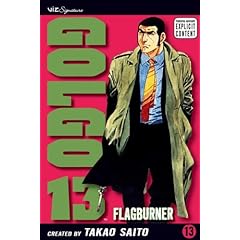
NO WAY. And this was first published in 1975?! Here's what I think: the first 150 pages of this book comprise a police procedural that starts with a multiple murder in 1946, moves forward 15 years, and then goes straight to HOLY FUCKING SHIT LAND. There are 26 stories to be found in the 13 volumes of Golgo 13 published by Viz. At least 22 are downright excellent, and then there's "The Serizawa Family Murders." Damn!! THANK YOU CARL HORN for getting these published. Now will SOMEBODY OUT THERE license the rest of these stories? I WANT MORE.


Well, it's a strange day indeed when the final issue of Doom Patrol, arguably one of the finest single issues of anything Grant Morrison has written and the conclusion to one of the two or three best American comics of the 1990s, gets knocked down cold-cocked by a thirty year-old Japanese book, but them's the breaks, Grant. Doom Patrol is sublime, surreal and surprising at every turn, but I think Vertigo really had their work cut out for them, as the last ten issues of the book formed one long continuity and there just wasn't any place to break it without making book five abnormally thin. As a result, this book starts one-third into an apocalyptic scenario without giving new readers a chance to catch up, lacking even a "story so far" page. The series is a work of complete genius and should be read by anybody who likes comics, but Vertigo's production really has been slapdash of late, hasn't it? They don't do the introductory essays and creator credits like they used to anymore. (I know what the great Sean Phillips is up to, but where the heck's Richard Case these days?) I'm willing to forgive any chance to get the final "Empire of Chairs" issue, both heartbreaking and life-affirming in equal measure, into readers' hands again, but they could have done just a little better on these editions, I think.

This book also includes the silly Doom Force Special, a needle-in-the-eye parody of Rob Liefeld's labored X-Men comics of the early 90s, full of intentionally awful anatomy, constipation faces, agonizing soliloquies and villainous ladies who wear next to nothing. Doom Patrol itself is absolutely recommended, but while you could pick up any of the first five books and get hooked, this one is best saved until later.

(Originally posted April 23, 2008 at hipsterdad's LJ.)

Tuesday, April 22, 2008

The Filth and some old Batman newspaper strips

Here's how this works: I finish reading something, and I tell you about it, and I try not to bore you to death.


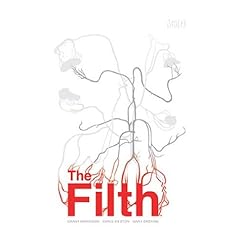
I reviewed this three years ago for my old Weekly Comics Hype, but this time around, I was not as engaged by Morrison's weird world than I had been. The narrative is occasionally very frustrating; I got lost wondering where some of the bizarre encounters with the Hand and its agents actually happen, and became aggravated by the multiple layers of the story. On just one level, it's one of Grant Morrison's very best stories, but it's too obscured by too many odd things to really resonate. On the other hand, some of the actual incidents are still pretty damn amazing, including one of the best death scenes ever, when Slade's fight with an assassin results in a neighbor getting... well, I shouldn't say. Chris Weston's art is amazing. Recommended if you like The Prisoner.


Oh, this is fun stuff. Originally published in 1990 by Kitchen Sink, Sterling Books last year reissued this in a low-priced hardback edition. It's the complete four-year run of Sunday Batman and Robin comics from 1943-46, back when the character was a detective adventurer for children, free from angst and the continuity of modern comics. Most of the stories are told over the course of two to eight dense pages, with lots of fun old art, mostly by Jack Burnley. Other contributors include Bill Finger, Dick Sprang and Bob Kane. The stories play like shorter Dick Tracy cases, and Batman's periodically lighthearted encounters with his foes are quite refreshing. They're not all whimsical, however. A great case where a "fortune teller" is murdered on a live radio show, only to curse his four killers with his dying breaths to cruel deaths of their own, is about as good as kids' entertainment can get. On the other hand, the old-fashioned art was an instant turnoff to the Hipster Son, who didn't stick around long enough to see Batman and Catwoman fight on the steps of the Parthenon in Nashville's Centennial Park. Seriously! Recommended for nostalgic readers.

(Originally posted April 22, 2008 at hipsterdad's LJ.)