Showing posts with label doctor who. Show all posts

Tuesday, February 24, 2015

The Doctor's Lives and Times

What I try to do with reviews at this Bookshelf blog is keep it simple and spoiler-free, and let you know whether I'd recommend you pick up a copy of what I just read. Seems to work okay. This time, a brief review of The Doctor's Lives and Times (Harper, 2014).


I loved this book completely and enormously! The Doctor's Lives and Times is a ridiculously fun book of found objects from another world - objects from the fictional universe of Doctor Who. Its breezy, photo-filled format makes it a great gift for readers of all ages; younger readers will be captivated by all the illustrations, and even the nerdiest of us will thrill to all the connections between stories.

James Goss and Steve Tribe have created a collection that includes an example of the "Karkus" comic strip that Zoe Herriot mentioned in 1968's "The Mind Robber," conspiracy buffs debunking some "cheap" 8mm color film footage of the Loch Ness Monster the same way that people in our world debunk the Patterson–Gimlin Bigfoot film from '67, blog posts from Mickey complaining about Rose going off into space with that Doctor, K-9 obliviously breaking Sarah Jane's heart by telling her about the companions that the Doctor took on board after her, and dozens and dozens of other things.

Each Doctor gets a chapter of fiction, followed by a few pages and photos of production information about their era, informed entirely by quotes from actors, writers, and producers. The authors intrude so little that their own opinions are not seen at all, which is a really novel approach to a Doctor Who book these days. The approach is one of tribute to the whole program and its narrative, not picking favorites or torching anything. It's a sweet and loving 50th anniversary book. Happily recommended for anybody with an interest in the show, of any age.

Thursday, January 30, 2014

About Time 7

What I try to do with reviews at this Bookshelf blog is keep it simple and spoiler-free, and let you know whether I'd recommend you pick up a copy of what I just read. Seems to work okay. This time, a brief review of About Time 7 (Mad Norwegian, 2013).


I'm very surprised to say this, but I didn't enjoy this book nearly as much as I thought that I would. I really enjoyed all of the previous volumes in this series - it is a dense, academic episode guide to Doctor Who that strongly considers the reality of television production and the take-em-for-granted influences of society and culture on the creation of the show - but while those volumes felt like labors of love, this one feels like the Twelve Labors of Hercules.

It covers the first two series of the revived show - the Rose Tyler years - and it does so with occasional, winking bits of humor*, but the overall feeling is one of resignation. It doesn't appear that the show really appeals to author Tat Wood anymore, and he's covering it begrudgingly. He judges each episode fairly in a well-reasoned commentary critique, and occasionally appears to appreciate what's been done, but he never seems to embrace the episodes. There's no passion in his arguments, no sense that he is writing these hundreds of thousands of words because he is actually inspired by the series anymore, but because the earlier books were so darn good and it would be a shame to not continue the series to cover the revival.

(Please note that this is not a complaint that Wood is too negative. Far from it. When he is critical, as he has always been, he has been fair and reasonable. It's just that this time out, even his praise is tempered by what feels like boredom.)

Worst of all, the majority of the supporting essays commit the cardinal sin of being incredibly boring. Now, there have been jokers in every one of these books, but previously, the essays were almost always among the high points, with just one or two which were a little head-scratching either in original intent or execution. The one in volume six about who narrates the program was the worst, taking an obscure question that only a bored and pretentious media studies undergraduate would even pose in the first place and then answering it in cod-academic gobbledygook that goes on for fourteen pages. This time out, I was only entertained by about six of the twenty-six essays. Most of them take that nonsense about narration as inspiration. The worst might be the essay for "The Idiot's Lantern," which rambles on about "theme park history" for eighteen turgid pages (I gave up, lost, after six), but similarly endless essays about what constitutes a story or who counts as a companion are also criminally boring. The book is thick enough to make spine wear a genuine worry already; I resent the probability that it will soon show visible damage because the page count was beefed up with unreadable wannabe academic tosh.

Even the best of the essays suffers from Wood's deathless prose. The accompaniment to "Love & Monsters" is actually one of the best that he's ever written. By far the book's high point (although another five or six of the 26 essays are also very entertaining and enlightening), it's a fantastic look at the development of fandom. Yet, despite its brilliance, this essay still contains an unlovable sentence like "Since 2005, phylogeny has recapitulated ontogeny and the development of these online groups has been a small-scale replay of this original developmental process."

The whole book suffers from unnecessary bloat at the expense of its usefulness. I can understand a price point of $35 for a deeply-researched book from a specialist viewpoint from a very small publisher. But the majority of the essays could have been expunged and the page count lessened by 30%, resulting in a book that would have not only been less expensive, but more likely to stand up to repeated reading.

Put another way, despite some really excellent moments - the fandom essay, a long look at actor Christopher Eccleston's departure, the unmissable one about how everything was timed just right for the show's return, some incredibly interesting considerations about writer Mark Gatiss's many influences, and many others - the overall tone is so dreary and dull that I'm actually not looking forward to the eighth volume. Something which should have been unmissable - series four, the Donna Noble run, is my favorite of the revival and will be covered in book eight - now seems like a chore that I don't want to read. Recommended for completists only. Sadly, I'm one.

*Best of all is an argument that starts in one section and makes its way to the endnotes about how certain the author is about a particular point of ephemera from a series of movies featuring the ageless pop star Cliff Richard in the late '50s, sort of the Adam Faith-Cliff Richard "he never said that" version of "Elementary, my dear Watson." I laughed aloud at this for several minutes, despite knowing Richard only from TV's Young Ones and the first Thunderbirds film, and Faith not at all.

Monday, January 6, 2014

Alien Bodies

What I try to do with reviews at this Bookshelf blog is keep it simple and spoiler-free, and let you know whether I'd recommend you pick up a copy of what I just read. Seems to work okay. This time, a brief review of Alien Bodies (BBC, 1997).


Tracking down a copy of Alien Bodies, an original Doctor Who novel by Lawrence Miles, might prove to be a little expensive, but man alive, is it ever worth it. Miles has, over time, become a complete curmudgeon, emerging from seclusion to complain a little bit about the modern series, and to complain a whole lot about the most recent editions, produced by Stephen Moffat - why did we ever complain about 1980s producer John Nathan-Turner being a publicity hound, with this fellow on TV about as often as his actors? - and, invariably, upon hearing of his latest cranky opinions, some fan will ask, not unreasonably, who is Miles and why anybody should care what he thinks? Well, he wrote two or three of the very best Doctor Who stories ever written, and that's why.

Foremost among them - I have another in the read-pile - is Alien Bodies, which, depending on when you ask me, could be tied for equal best-ever with "City of Death" and "Blink." This story's a work of genius: wild, brilliantly original ideas, a never-done-before plot, and constructed with sparkling, silly, knowing wit throughout. I love it to pieces. When I sold off nearly all of my late-90s BBC Books, I certainly held onto this one.

From 1991-96, while the TV series was off the air, Virgin Books had the license to publish Who novels. Many of these were really good, and many of the writers who would work for the show when it returned in '05 got their start in the line. Unfortunately, with the attempt at a new series starring Paul McGann - a TV-movie that didn't get the then-needed commitment of a US deal with co-production money - the BBC chose not to renew Virgin's license, and brought the novels in-house. The results were less than mixed - the books were mostly downright awful. Even established authors with a strong track record struggled under what seemed a mix of editorial interference, the most unlikeable, market-tested of all companions, and an inability to capture McGann's mercurial Eighth Doctor. (To be fair, they had little to go on, but Steve Parkhouse, more than ten years previously, had even less to go on when scripting his Sixth Doctor comics for Marvel, and he created a much, much more likable character than the TV people ever did.)

So it's really remarkable that Miles was able to take McGann's character, who only had about fifty-some minutes of screen time in a very disappointing ninety-some minute movie, and write a Doctor who is firmly and unmistakably McGann on every page. I've often said that, despite that blasted movie, McGann's Doctor is one of my favorites. That's in part for the promise of stories we never got to see, and in part for the ebullient and wonderful way he played the character so briefly, and in part for the terrific run of comics that featured the character and which were mostly about a trillion times better than the novels. The main reason, though, is how Miles writes him in this book. He's slightly befuddled, confused about the long game strategies that his previous self would often put into play, given to disarming smiles and honest charm, and not a conventional hero at all, but the most happily unpredictable and optimistic of them.

In Alien Bodies, not to give too much away, the Doctor runs into a very curious auction, where powers from very, very far in the future have assembled on a remote island on 22nd Century Earth to bid for a mysterious weapon. Among these are the Time Lords of the Doctor's far future, who are engaged in a losing war against a strange, unnamed Enemy. (This is not the "Time War" that has overshadowed the modern series; Miles had something far more interesting in mind for this.) The other participants include a time-traveling voodoo cult who worships the Grandfather of all Paradoxes, and an entity who has left corporeal space behind for the realm of concepts. And the Daleks are due to arrive to place a bid, but their envoy has been intercepted by another of the Doctor's old enemies, who, quite surprisingly, effortlessly destroys the Daleks and uses the opportunity to push its own agenda. Things start out bad, get worse when the very sentient TARDIS belonging to the Time Lords' future agent self-destructs, and that's before the Doctor learns just what in the universe these extremely dangerous lunatics are actually bidding on.

It's more than the flow of this book's plot that's completely unpredictable, it's the constant, creative ways that the Doctor gets out of wildly bizarre and impossible problems. Every time I read this book, I find new and wild ideas that I'd missed before, and I'm hugely impressed by the really strong sense that Miles wants to forge new trails and keep his version of Who from ever becoming stale or set in its ways. There's nothing typical or traditional about his vision for the series, and it is a blessed shame that he has had such a long disagreement with the modern series' architects to keep him from participating or contributing to it. Doctor Who works best with dangerous and left-field ideas like Miles generates here. Highly recommended.

Sunday, June 30, 2013

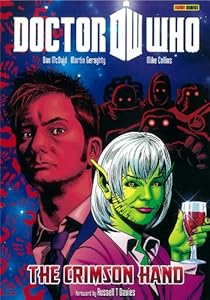
Doctor Who: The Crimson Hand

What I try to do with reviews at this Bookshelf blog is keep it simple and spoiler-free, and let you know whether I'd recommend you pick up a copy of what I just read. Seems to work okay. This time, a brief review of Doctor Who: The Crimson Hand (Panini, 2012).


Credit Where It's Due Dept: The last two Panini collections of Doctor Who comics got some pretty well-deserved raspberries from me, because the publisher solicited them at a price of about $24, and then when they showed up, they cost $32. Well, I no longer care to read advance solicitations for comics, but I do note that when The Crimson Hand finally showed up, as explained below, it came with a price printed on the back cover of the book itself of $31.95, covered up by a large sticker that corrected it to $24.99. Thank you, gentlemen, that's the way that it should be done.

Having said that, it's possible that when The Crimson Hand was originally solicited, it might have been so long ago that I actually was still paying attention to these things. The book was caught up in a sad and lengthy tug of war between various branches of the BBC's licensing and marketing departments. Apparently somebody started thinking about things too deeply and wondered whether Panini's license to print comics extends to giving them the right to collect these comics in a book form, and whether they might need a different license for that, because some other department has that license. And then there's the issue of the logo. Brands being all-important, it wouldn't do to have the David Tennant logo on new merchandise, because since Matt Smith became the star, there's a different logo... good grief, did anybody dare dream that when Doctor Who came back in '05 that things would get so silly?

The comic has always had a silly streak, but it's also played fairly within the rules of the continuity since the TV show returned. This left the comic's creators with a really great opportunity. They would have something like eighteen months between the end of series four and the debut of Matt Smith's Doctor to do whatever the heck they wanted. If the comic had become a little straitjacketed by the show continuity, this was a rare and happy opportunity to revisit the freewheeling anything goes decade of the Eighth Doctor, with long and involved subplots and lots of recurring characters.

Orchestrated by Dan McDaid, who wrote most of the resulting stories, the free-from-teevee-rules final run of the Tenth Doctor - you can slot this entire book in between the TV episodes "Planet of the Dead" and "The Waters of Mars" - sees the Doctor crossing paths with a ruthless green-skinned businesswoman called Majenta Pryce and, much to his surprise, traveling with her for a time. To his even bigger surprise, she has very mysterious origins of her own and is being pursued through time and space by four incredibly ruthless and powerful beings.

This collection is a great big satisfying chunk of story, realistically more than can be absorbed in a single sitting. Artwork is provided by the reliable Mike Collins, Martin Geraghty, and Paul Grist, and I really enjoyed Geraghty's Kirby-esque designs for the Crimson Hand. It's fun and surprising, and while the Doctor himself is probably not in any real danger, it's a book where everybody else is. Recommended.

Monday, April 8, 2013

All-Consuming Fire

What I try to do with reviews at this Bookshelf blog is keep it simple and spoiler-free, and let you know whether I'd recommend you pick up a copy of what I just read. Seems to work okay. This time, a brief review of All-Consuming Fire (Virgin, 1994).


Since I've been reading or rereading some revisionist Sherlock Holmes stories, it's only natural that I'd want to dust off what I remembered as one of my favorite Doctor Who stories from Virgin's seven-year line of novels. Andy Lane's All-Consuming Fire sees the Doctor teaming up with Holmes and Watson, or, rather, the "real" people whose adventures were published under the pseudonyms of Sherlock Holmes and John Watson. This concept is a recurring one in revisionist Holmes literature, and one that honestly doesn't stand up to very much scrutiny. However, this concept was nevertheless gleefully embraced by Who fandom, which is why some of us old-timers are a little aggravated with one aspect of the last couple of years of the TV series. We've lately been informed that the fictional Sherlock Holmes was actually based on Madame Vastra, a heavily veiled lizard woman who assisted police with their inquiries. I actually kind of liked Madame Vastra just fine until that insistence*. It messed with a perfectly good novel that had a much, much more sensible take on how the Doctor could team up with Holmes.

Well, I say "perfectly good," but it's actually very flawed in one respect: one of the Doctor's companions is utterly unlikeable. Having been away from the New Adventures series for so long, I had forgotten how unpleasant and downright awful Ace had become. The writers had played a pretty neat trick with the character, who had been depicted in the last two years of the TV series as an Earth girl in her late teens. After nine books, she left the Doctor in the far distant future, only to call for his help and rejoin the Time Lord three books, and three years, later. In the meantime, she'd joined the army (space marines, actually) and become much more jaded and surly. The writers of the books greatly enjoyed playing with the characters of the manipulative Doctor, his broken friend Ace, and the third part of the triangle, a fantastic and fun archaeologist named Bernice, who's one of Doctor Who's all-time best companions. The interplay between the three is almost always engaging and fascinating.

But Andy Lane, writer of this novel, makes the awful mistake of putting Ace and Watson together. This does not do Ace any favors, and it took me completely out of the story.

Lane does an incredible job capturing the feel of Holmes, and much of this book should be praised as one of the very best of all the countless Holmes pastiches. It is structured as a Holmes story into which the Doctor keeps interfering, rather than the other way around as Who readers might expect, and Lane nails the tropes and the characterization. He also proves that he's also very familiar with the tropes of the pastiches that have preceded him. So Lane becomes the latest in a long line of writers to speculate about a certain giant rat of Sumatra and the inner workings of the Diogenes Club - naturally, the third Doctor is a member, despite really being a much more clubbable sort of chap than their usual roster - and he follows William S. Baring-Gould's theories and provides Sherlock and Mycroft with an older brother. In fact, it's such an entertaining Holmes story that the more it blazes off into science fiction, the less I enjoyed it. It's not even simplistic alien invasion stuff, but body horrors and Lovecraftian old gods and sickening metamorphoses, not the sort of sci-fi that I like to read in the first place, and it feels like the whole novel, and not just members of the supporting cast, loses humanity as the book itself transforms from proper Victoriana into something hideous and modern.

Nowhere does this transformation hit home harder than in the Watson-Ace dynamic. I think that Lane made a bad miscalculation here. Watson is one of fiction's most beloved characters. To love Holmes fiction, even the stories written from alternative points of view or set, like Laurie King's often wonderful novels, after the conclusion of their partnership, is to love John Watson, for all his bad luck, quiet dignity, and loyalty. Now, I understand that he's the guest star and Ace is one of the heroes of the show, but to have Ace constantly belittle Watson and yell at him just drives home how horrible she's become. (And what a poor host, to be so disrespectful to a famous guest!) I've read all the New Adventures, some of them many times, and I thought that I was used to "New Ace" and all her unhappy, brittle points, but either I had forgotten how shrill she is in the years since I last read one of these books, or Lane drove her to extreme behavior in this one, or I've become much, much more of fan of Watson without realizing it. Ace doesn't enter the narrative for 200 of the book's 300 pages, meaning I spent a hundred pages waiting for her to get a comeuppance for being so nasty to Watson. If this is the modern world, give me Baker Street.

I know that I had read All-Consuming Fire at least twice before, and I enjoyed the London-set material so much that, during this reread, it was like reacquainting myself with a beloved old friend. I found myself very surprised to have so much more of the book left to read once the disturbingly alien elements appeared, suggesting that I've always found the events on the planet Ry'leh to be disappointing by comparison; I'd remembered the book as having much more happening in England and in India than in space. Maybe that's just the book that I would rather remember, because what happens in space isn't happy and is downright nasty to Holmes and Watson, and what happens on our planet is a blast and very respectful to those characters, firmly one of the best of all the pastiches until things get dark. Recommended for Holmes fans with very strong reservations.

*A second aggravation is that I'm very pleased that Vastra and Jenny are happy together, and, were they residing on contemporary Earth, I'd wish them a long and happy legal marriage. Since they're in 1880-something, however, I think that their public claims of a happy marriage are just this side of completely idiotic. And she's not Holmes, either. The fellow in this book [and the following year's Happy Endings] is Holmes, and Vastra is a Silurian in a veil. Steven Moffat really has done a thorough job in letting us all down.

Tuesday, April 17, 2012

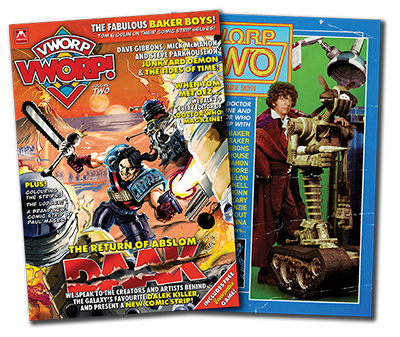
Vworp Vworp # 2

What I try to do with reviews at this Bookshelf blog is keep it simple and spoiler-free, and let you know whether I'd recommend you pick up a copy of what I just read. Seems to work okay. This time, a brief review of Vworp Vworp # 2 (self-published, 2011).


I was starting to despair that I wasn't going to see this magazine! I intended to order it, lost track of things, got busy and when I finally got around to ordering it, it was sold out! I drummed my fingers and waited for a second print run. I waited like a refugee in Casablanca for an entry visa to the USA. A couple of months went by before it was finally made available for order again. Do not make this mistake. If you enjoy Doctor Who, order this today!

Vworp Vworp is a fanzine about fandom, basically. It's a celebration of Doctor Who Magazine and its often terrific comic strip. The zine is professionally laid-out and designed, absolutely packed with information, and is, overall, a far larger package than can be absorbed in one sitting. Some of the interview material is really dense and detailed, and it strides a thrilling line between unchecked enthusiasm and scholarly, academic distance. Colin Brockhurst, Gareth Kavanagh and the various writers are taking their subject seriously, but also having a blast.

One of the major focus points in this issue is Abslom Daak, a supporting character in some back-up comic strips from the early eighties. Written by Steve Moore and illustrated by Steve Dillon and by David Lloyd, the character was retired after a few well-remembered adventures. Moore reveals details on how much backstory went into his creation and an abandoned expansion of the idea. One of the trademarked Who-universe members of the cast was due to be killed off in the next episode, which is visualized in a newly-commissioned full comic treatment of Moore's old script; it's one of two new comics in the magazine. Interestingly, Daak's creators daydreamed about moving the character into a separate Marvel series without any Who ties, should the license ever be lost. This could have, in some fantasy world, resulted in an American TV series starring Gil Gerard or a BBC-TV series starring Ian MacShane. Much fun is had visualizing such programs and their attendant early-80s merchandising.

There are lots of other terrific interviews, including with Mick McMahon, artist of the legendary "Junkyard Demon," a pile of former editors including the always entertaining Dez Skinn and the seldom-interviewed Cefn Ridout, and Gareth Roberts, who adapted his hilarious Tenth Doctor comic "The Lodger" into a not-quite-as-hilarious Eleventh Doctor television episode.

The magazine shines with affection and good humor, and anybody reading this will be taken with how lucky the creators are to get to play in a sandbox with so many toys, and how much fun they're having sharing their hobby. Highly recommended!

Tuesday, November 15, 2011

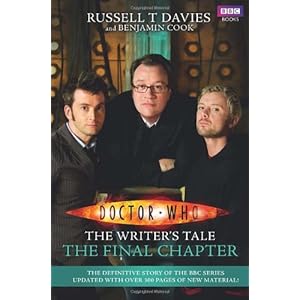
Doctor Who: The Writer's Tale

What I try to do with reviews at this Bookshelf blog is keep it simple and spoiler-free, and let you know whether I'd recommend you pick up a copy of what I just read. Seems to work okay. This time, a brief review of Doctor Who: The Writer's Tale (2nd edition, BBC, 2010).


This was a little exhausting. It was also a pain in the rear to read! At 704 pages, no paperback will be long for this world without putting only one half of the book down on your reading desk or table at a time while holding the rest gingerly. Since a book as compelling as this will be sending fans and researchers back and forth to their bookshelf constantly, I suspect this was a ploy of BBC Books to sell more copies - one to keep in as-pristine-as-possible condition, and one to have its spine destroyed by constant rereading.

Anyway, it's a lengthy, exhaustive, incredibly engaging back-and-forth correspondence between Doctor Who's executive producer and head writer from 2005-2009, Russell T. Davies, and journalist Benjamin Cook. It starts just before transmission of the 2007 season with David Tennant and Freema Agyeman, while Davies was prepping for the fourth season, which co-starred Catherine Tate, and goes right through the end of Tennant's time in the lead role. It is huge fun, because Davies is so incredibly effusive, candid and indiscreet.

There's a fair amount of celebrity gossip, but it's all much more interesting than trivia. The remarkable stardom of Kylie Minogue will probably leave most American readers, unaware of her really amazing run of British hit singles, baffled, but the genuine affection that Davies has for the actors that the show employed - especially the great Bernard Cribbens, whose real-world wartime experiences became the fictional Wilf's - was great to read.

The best experience is just understanding how Davies somehow managed to function at all in such an incredibly high-stress job. British television drama places far more of the load on one person - Doctor Who, unlike American shows, doesn't have a writers' room - and the amount of rewriting that Davies did on most of the stories will probably have you questioning why on earth he didn't just write every episode himself. I didn't always agree with Davies's choices on Who - despite so much to enjoy and embrace, four of his five super-big endings just fell flat for me - but there's no question that his work is the living definition of a labor of love. Recommended for anybody who enjoys the show, or anybody who wants to write.

Sunday, April 4, 2010

Doctor Who: The Widow's Curse

What I try to do with reviews at this Bookshelf blog is keep it simple and spoiler-free, and let you know whether I'd recommend you pick up a copy of what I just read. Seems to work okay. This time, a brief review of Doctor Who: The Widow's Curse (Panini, 2009)


You remember how, in August of last year, I reviewed the previous volume in Panini's series of Doctor Who collections, and noted, with some skepticism, that it arrived costing about a third more than the solicited price? And how I wondered whether, when the next book showed up, they'd pull the same scummy stunt? Well, The Widow's Curse did come out towards the tail end of 2009, and it did cost $32 when it was solicited as a $25 book. Those guys are making it very difficult to justify letting them go without clearing my throat about their business practices.

The contents almost make up for the price hike. Ever since the TV series returned, the comic strip has been treading water, making the mistake of letting rotating teams of creators tackle the strip. That's not to say the individual stories are lacking - Ian Edginton and Adrian Salmon contribute a cracking little three-parter, and Jonathan Morris and Rob Davis give the terrific character of Donna Noble, one of my all-time favorite Who companions, a send-off so terrific in "The Time of My Life" that it's almost worth the cover price alone.

However, the feature would be so vastly improved by letting a single team loose on it. Panini's earlier collections prove this repeatedly, earlier allowing the likes of Steve Parkhouse and Scott Gray the chance to develop storylines and revisit themes. As individual comic stories go, most of these are quite entertaining, but reading them like this, you can never escape the knowledge that they could have been so much better under a single writer's tenure. Happily, the 21 episodes that followed these story - the tales featuring comic-only companion Majenta and due for release in their own collection later this year - were all scripted by Dan McDaid and are said to be much more successful and consistent. I'm looking forward to them - let's just get the price right, Panini! At $32, it's recommended with reservations. At $25, it's about right.

Monday, March 22, 2010

Vworp Vworp! # 1

What I try to do with reviews at this Bookshelf blog is keep it simple and spoiler-free, and let you know whether I'd recommend you pick up a copy of what I just read. Seems to work okay. This time, a brief review of Vworp Vworp! # 1 (2010)


Doctor Who Magazine has been running its tie-in comic for more than thirty years now, and it's usually been a terrific read. There have certainly been patches where it hasn't been as consistently entertaining as the TV show, but frankly, anybody who'd rather watch "Destiny of the Daleks" than read "The Star Beast," or watch "Terminus" over reading "The Stockbridge Horror" just needs their head examined.

It's for people who know that the comic is as vital and engaging a part of Doctor Who's canon as anything else in the fiction that Vworp Vworp!, a fanzine co-edited by Colin Brockhurst and Gareth Kavanagh, is intended. The first in a planned periodic series, the zine is a loving tribute and analysis of the comic. Just like British newsstand comics from the 1970s, it even comes with a free gift - a set of rub-on transfers of the Eleventh Doctor, Amy and some Daleks, drawn by Paul Grist!

Inside, I quickly realized that the writers really know their target audience. The writing, like the best work in Doctor Who Magazine, expertly strides the line between "academic analysis" and "huggingly enthusiastic." The story of "The Iron Legion," the magazine's first serial, is told via interviews with Pat Mills, Dave Gibbons and original editor Dez Skinn, and would not be at all out of place in the professional magazine that they're praising. The writers also turn their attention to the final Eighth Doctor strip, "The Flood," and to Adrian Salmon's thunderously weird "Cybermen" serial. There's a tribute from the magazine's archivist, Andrew Pixley, and David J. Howe resurrects his early '90s "Collectors Corner" feature, designed to look like it came right from an old issue.

There are three new comic strips as well. None of them are necessarily essential, but I enjoyed all of them just the same. "The Master's Life on Mars," by the zine's co-editor Kavanagh and John Daiker, was my favorite of the three. It's a clever little runaround that fiddles with the resume of the last actor to play the Master on television. Daryl Joyce's "Clash of Empires" and Christian Cawley and Justin Abbot's "Time Leech" are also very fun. I think that Joyce has been doing professional work for some time, but there's no reason why the other creators couldn't be doing work for the big leagues pretty soon as well; it's all high-quality stuff.

Overall, it's a really good-looking package, very slick and professional. (It's easy to forget just how terrific fanzines can look these days!) Brockhurst's design work is really impressive, and they're able to cram buckets of entertaining and insightful material into the eighty pages. I enjoyed it all very much and will certainly return to it frequently. Very highly recommended to all Doctor Who fans.

Saturday, February 13, 2010

The Left-Handed Hummingbird

Here's how this works. I read a book or two and tell you about them and try not to get too long-winded, and maybe you'd like to think about reading them as well. This time, a review of The Left-Handed Hummingbird (Virgin, 1994).
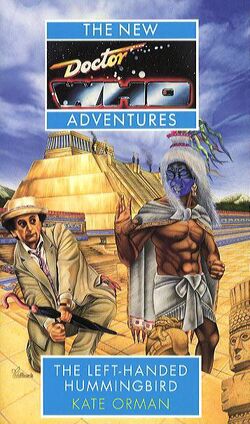


Doctor Who's longest-serving TV producer, the late John Nathan-Turner, used to disparage his predecessors' work with a blanket warning that "the memory cheats," and the past wasn't as good as you remember it. Not the New Adventures, though, surely? Those were really good, right?

I've mentioned in my LiveJournal several times that I remain fascinated by the original TV series' final three years, because it's one of those rare times where everybody involved had far more enthusiasm and excitement than actual experience. It's the reverse of the previous Colin Baker era, where the show was a competent production of bored and lazy scriptwriting; instead, the 1987-89 seasons featured some of the most original and wonderful stories of the program's history, but only an apologist can defend the amateur-hour production that presented them. A 1978 Doctor Who episode was as lavish as anything else made for British television in 1978; a 1988 Doctor Who episode was not.

This is also mostly true of the New Adventures, a series of novels published by Virgin during the property's TV hiatus from 1991-96. Much is notable about them; apart from giving future TV wunderkind and Who savior Russell T. Davies his first professional sale, many of the concepts and continuity established in the New Adventures informed the show's 2005 resurrection. In all honesty, David Tennant's "lonely god" portrayal is just a continuation of how the seventh Doctor was depicted in these books. They were written, mostly, by novices and amateurs, fans with little more than fanfic credits behind them given the opportunity to leave a lasting mark on the Doctor Who canon.

Sadly, the writers' enthusiasm often outstripped their talents, and the books really were informed too much by the tropes of SF / Fantasy novels of the period. There is, tragically, more than one virtual reality prison in this series, and a fascination with "cyberspace" in a half-dozen different iterations that already seems hopelessly naive. Every third book seemed to feature the Doctor and some timelost figure like William Blake landing in what seems to be a Victorian country manor, and those that didn't seemed to pit the Doctor against some nebulous Lovecraftian god/monster/entity with a stupid name from before the dawn of time or something. The Left-Handed Hummingbird, Kate Orman's debut novel, features a villain called the Blue, for pity's sake, which is actually the psychic shockwave left behind when an Aztec warrior with low-level psychic abilities ran afoul of some space alien's radioactive detritus, destroying his body and leaving him adrift as an undying memory that has encouraged mass violence over the last 500 years. Yeah, make an action figure of that, won't you?

I'm actually breaking one of my rules by reading this book at all. I started with the New Adventures pretty late, missing this book by about six months. As I plugged in the gaps in my collection, I encountered this author's later books in the series, which I did not enjoy, and decided this one must be skippable. Some years later, after the BBC reclaimed the publication rights, I read one of hers that was so terrible that I vowed I was done with her fiction for good. The problem seems to stem from Orman's fanfic background.

Around 1999, I read Carol Bacon-Smith's Enterprising Women and learned about this subgenre of "hurt / comfort" fiction, terrible amateur fandom novels by daddy-issue-wracked authors wherein Captain Kirk gets impaled by something and Mister Spock comforts him, possibly, though not necessarily, just before they start smooching. Orman's books are awash with this garbage. Her later novels in the series feature alien ganglions growing out of the Doctor's shoulder, and that's before he gets impaled with an arrow, gets hypothermia, has a heart(s) attack and is confined to a wheelchair, and so on, always finding loving comfort from his companions who nurse him. It's not as though she was unaware of the trope; once, looking up a reference to make a point, I realized that the most offensive chapter in her novel Set Piece was, in fact, entitled "Hurt / Comfort." Well, so long as she's okay with it. Her fiction depicts an endless, utterly repulsive series of sadistic, brutal, meaninglessly cruel acts, and I grew tired of wondering what the hell Doctor Who ever did to Orman to make her hate him so much. Better off not wondering, I drew a veil over her fiction.

But this one hole in my New Adventures collection was bothering the heck out of me.

In her considerable defense, Orman brought a lot more to the canon than this loathsome, over-the-top brutality. When I landed a copy of this book from paperbackswap.com last month, I knew I would get some really interesting material apart from the violence. Orman is actually responsible for one of Doctor Who's very best concepts. In Return of the Living Dad, she established that Benny's father has lived for many years on 20th century Earth helping refugee aliens left behind after the Doctor and UNIT kicked their invading asses, which is just a lovely notion. One of these appears to be an invisible man holding a plastic spatula, but it turns out to actually just be the spatula, floating. It's an Auton spatula, left behind in 1971. That is the greatest idea ever. Her books are peppered with lovably clever bits like this.

There was only one thing I disliked about Steven Moffat's 2008 TV episode "Silence in the Library," and that's the way the Doctor could not seem to wrap his brain around the notion of meeting people, like River Song, out of sequence. Surely this happens to a time traveler with centuries of mileage all the time, right? It certainly happened in the novels far more than once, but I think that Orman did it first in her debut. It starts off wonderfully, with Cristián Alvarez, a troubled man in his fifties, meeting the Doctor, Benny and Ace for the third time, although they have not met him yet. This forces them to confront the Blue at several points throughout history, crossing Alvarez's path twice more.

However, all of the promise in Orman's concepts is overshadowed by the problems that I knew I'd find. The enemy is just a vague, ill-defined threat without any character or understandable motivation, and the gruesome violence is even worse than I feared. At various points, the Doctor bleeds from his eyeballs, bleeds from his nose and bleeds from his ears as the Blue explodes psychic bombs in his head, and he later spends three weeks being captured and tortured by some rogue lieutenant somewhere in some paranormal division of UNIT. None of this cruelty serves the plot in any way. The story would be the same with simple blackouts, and the three weeks of torture literally do not advance the plot at all, and the events are written in the most repulsively lurid manner, as though for an audience of gore fetishists. Orman once wrote a review of the TV serial "Ghost Light," a 1989 example of a tremendously good story ruined by a sloppy, barely coherent production, which suggested that she understood Doctor Who better than most, but the psychological and physical trauma that she delights in ladling out in this novel makes me question whether she ever really did.

Perhaps just as disappointing as the violence and the antagonist, there's the issue of her prose. Dan Brown has written better. You can tell it's the work of a novice, for there are characters introduced some forty pages before their first physical description. In other places, characters enter scenes by way of pronouns, three pages before we're given a name and see that it's a character that both we as readers and the other character in the scene already know. There's that fantasy-fic trope of passages that turn out to be a dream, and sequences more interested in establishing a mood of foreboding and menace without coherently defining what physically occurred. A sequence where the Doctor's old friend Professor Fitzgerald, possessed by the Blue, attacks Benny is the worst offender here, a lengthy passage that simply does not make any sense until characters explain it later, but it happens repeatedly throughout the book.

Orman certainly has her fans, and she was always rightly praised for the insightful, believable depiction of the bond between the Doctor and his companions. It's just a shame that all the good that Orman did for Doctor Who's canon had to be wrapped in these unlovable, hateful, hate-filled books. I should have left that hole in my New Adventures collection alone. Not recommended at all. Avoid.

Friday, November 13, 2009

Nothing at the End of the Lane

Here's how this works. I read a book or two and tell you about them and try not to get too long-winded, and maybe you'd like to think about reading them as well. This time, a review of Nothing at the End of the Lane (Lulu, 2009).


There's just something about the production of Doctor Who that inspires so much more curiosity than any other television series. Anything else, we just take it for granted that it was being filmed in some dingy studio or backlot somewhere, and its cleanup for DVD is a matter of boring technical necessity. Nothing about removing grains from old 35mm prints of, say, The Saint strikes me as being essential reading. But give me 15,000 words about finding some new frames that were once cut from a 1967 Nigerian repeat of episode three of "The Faceless Ones" and I am totally hooked.

Nothing at the End of the Lane is a very sporadically-published fanzine devoted to the specialist minutiae about the restoration of black and white Doctor Who. It's not a read for fans who think they have an iron in the fire about whether Martha or Rose was more in love with our hero; it's for people who want to know about the 108 missing episodes and their "telesnap" reconstructions. The two lengthy issues of the zine are long out of print, but the editors have put together a very nice reprint in a single omnibus bookshelf edition, and it is just fascinating reading.

This could have ended up being pretty dry reading, and certainly some of the articles veer towards the eye-punchingly introspective. Worst among them is a questionnaire-styled interview with several of the fans who recreate lost episodes via filmstrip-like slideshows and a capture of the audio. I concede that I just don't have the patience to sit through these, no matter how laudable and praiseworthy the work put into them is, and I certainly don't care about their adherence to the original camera script of the televised episode. Thankfully, for every moment of too-deep-for-the-small-screen navel-gazing, there's something much lighter and equally loving, like David J. Howe's nostalgic memories of a Cyberman serial called "The Invasion," or a bizarre comic strip in which the TV Comic Dr. Who and his two grandchildren help Big Name Fan Ian Levine rescue lost episodes from the Wicked Witch of the West!

With contributions from notable fandom names like Richard Bignell, Richard Molesworth, Andrew Pixley and Stephen James Walker, the book is packed with interesting stories, and bizarre, trivial items coming to light after days spent researching copyright clearances and payments to actors' agents to try and source a print of some 1965 serial. It's probably not for everybody, but if the facts of Doctor Who are just as interesting to you as the fiction, then this is certainly a book for your own library.

Sunday, August 9, 2009

Doctor Who: A Cold Day in Hell!

Here's how this works. I read a book or two and tell you about them and try not to get too long-winded. This time, a review of Doctor Who: A Cold Day in Hell! (Panini, 2009)


We've reached the point in these collections of the Doctor Who strip where I originally stopped buying the magazine, so I was pretty interested in checking this book out. I'm kind of hazy as to why I quit reading, but I sort of recall that the price went up and they dropped eight pages back in 1987. I'm also pretty sure that I enjoyed Sylvester McCoy's Doctor more than anybody else that I knew at the time, but my enthusiasm had still ebbed after a couple of years of fandom. I also seem to recall one issue's cover with McCoy and Richard Briers making stupid faces at each other, and lit so they looked like a couple of ugly jack o'lanterns and deciding my money would be better spent on Siouxsie and the Banshees records.

Inside, the comic was going through some radical changes. In the seven pages of commentary in this collection, John Freeman interviews the comic's editor, Richard Starkings, who confirmed that the magazine was going through some belt-tightening at the time, and that artist John Ridgway, who had drawn the strip since the first Colin Baker episode, was passed over in favor of a rotating series of writers and artists.

The intent was apparently to follow the TV series' lead, as of course each serial had its own screenwriter and director. However, this simply doesn't work as well with an ongoing comic. Particularly in collected form, the inconsistent tone provided by having a new team for each story really jars.

As for the individual stories, some fail spectacularly, but some are pretty good. Freeman's two-part "Planet of the Dead" is a really fun romp, and I like the way the Doctor really seems completely lost, yet still in character, but it's undermined by Lee Sullivan's artwork. In time, Sullivan would grow into a favorite on Judge Dredd, but this early work is really rough and his storytelling is confusing, and the story's aliens, a shapeshifting bunch called the Gwanzulum, are just about the dumbest looking monsters in a series known for dumb-looking monsters. It ends up feeling like a rough draft for what should have been a memorable anniversary runaround, just a disappointment.

A lot of the book is like this, with novice artists just starting their comic career undermining a good story or two. Admittedly, neither Kev Hopgood nor Dougie Braithwaite were ever among my favorites when they started on 2000 AD a few years later, but their work here is just terrible. So is "Culture Shock!," a one-parter written by Grant Morrison and utterly ruined by a teenage Bryan Hitch, who would of course go on to far better things in the future, but who barely understands page composition here. It works the other way around in one case, though: veteran Alan Grant turns in a completely awful script called "Invaders from Gantac!" about an alien invasion of Earth totally at odds with anything else Doctor Who has ever presented, but somehow artists Martin Griffiths and Cam Smith make it look readable.

Elsewhere, among the 21 episodes in the collection, are two crossovers with other Marvel UK titles, putting this Doctor in the same continuity as Death's Head and the Sleeze Brothers. Apparently, these really aggravated readers when they originally appeared. Having never read Death's Head or the Sleeze Brothers myself, all I can say is that I am in no rush to go back and read any other Marvel UK series that I might have missed. These are just awful.

The best stories here are the first four episodes by Simon Furman and John Ridgway, before he moved on, a one-off by Furman and the wonderful John Higgins, and a creepy, clever two-parter by Dan Abnett and the returning Ridgway. Everything really meshes with these episodes, and I almost get a sense for what a regular team might have accomplished. While I honestly liked the artwork in this book by Griffiths and Higgins, the collection in some alternate universe where Ridgway got to draw the whole thing would certainly be a superior prospect. Recommended for fans only.

(Oh, one final bugbear about this book: while I realize that exchange rates often make it difficult to price things in advance, if you're out there, Panini, I really didn't appreciate ordering a book solicited in Diamond for $24.99 only to have it arrive costing $31.95. Seriously, are you going to do this with the supposedly $24.99 [see here] edition of "The Widow's Curse" when it shows up in November?)

Wednesday, July 15, 2009

About Time 3

Here's how this works. I read a book or two and tell you about them and try not to get too long-winded. This time, a review of About Time 3 (2nd edition, Mad Norwegian Press, 2009)


Let me start by saying this: if you like Doctor Who at all, then you need to be reading the About Time series. These are incredibly dense books which look in amazing, critical detail about the production and the history of the TV series, with a firm eye on the culture in which it made.

When Lawrence Miles and Tat Wood came up with the idea for the series, I think there might have been some question as to how they'd be received. The first edition covered the Jon Pertwee years and was successful enough for subsequent volumes to be granted a considerably larger page count. With the original series completed in six volumes, Wood, now working alone, was able to return to that first Pertwee book and massively revise it to more than match the page count of the others in the series. Now a stunning three times as thick as the first edition, About Time 3 is a jawdropping doorstop of a book. If you bought the earlier one, you will want to upgrade.

The well-written essays cover everything from Welsh stereotyping in the "Green Death" serial to the controversy about when the UNIT stories were set to Torchwood's apparent inept series of failures through the 1970s. You'll learn more about the development of fictional concepts that fans take for granted, such as regeneration, as well as backstory about how the low-budget series afforded a prop as expensive as the space capsule in "The Ambassadors of Death." (Answer: they split the cost with the contemporary BBC drama Doomwatch.)

Working knowledge of the TV series is probably required before this text can be transformed from arcane academia to fascinating backstory, but if you know who Jo Grant and Sea Devils are, you're going to want to read this book. You probably won't agree with all of Wood's critiques, but it is so refreshing to read informed opinions from a writer who is willing to buck the party line and both praise overlooked moments and offer serious bludgeoning to fandom's sacred cows. It really gives me hope for the forthcoming seventh volume, looking at the current series. Since the shelves that are full of authorized commentary on the present production are all-a-smiling, and Wood routinely gives the impression that he doesn't like the BBC Wales series at all, his contrary viewpoint will make for really fascinating reading. Can we have that book next week, Mr. Wood?

Sunday, May 3, 2009

Doctor Who: The Betrothal of Sontar

Here's how this works. I read a book or two and tell you about them and try not to get too long-winded. This time, a review of Doctor Who: The Betrothal of Sontar (Panini, 2008).


Panini has released a pair of 100-page magazine collections of the more recent episodes of their long-running Doctor Who strip since the series returned. In fact, Christopher Eccleston only played the Doctor long enough to make it to about 100 pages of comics, so that's all the compilation that he'll ever get, but "The Betrothal of Sontar" is the first time that one of their big, lovely graphic novels is devoted to the modern series. It contains all of the Tenth Doctor & Rose strips from Doctor Who Magazine #365-377 plus one from the 2007 Storybook, and wraps up with the first post-Rose story "The Warkeeper's Crown" from #378-380, which features the return of the Brigadier along with longtime Eighth Doctor artist Martin Geraghty.

From a creators' standpoint, it really is a mixed bag. One thing that has made the strip so enthralling over its thirty-year run have been the lengthy runs by a consistent team, whether the original Mills/Wagner/Gibbons lineup, or the Parkhouse run of the Fifth and Sixth Doctors, or the terrific Gray/Geraghty run for the Eighth Doctor. The strip was at its weakest in the early 90s when it was without a regular team. Since 2005, it's had rotating writers and artists, and sometimes there are eye-rolling duds like Tony Lee's "F.A.Q." but the approach does have advantages. By letting the TV show dictate the subplots and continuity, the strip can focus more on high-concept adventures that no TV show's budget could manage, like John Tomlinson's titular adventure and Mike Collins' reality-warping "The Futurists."

That might seem an odd distinction, but it results in a mix of stories simply too wild for any TV budget and more amusing episodes that play with the modern series' character dynamics. Best of all is a one-off written by Gareth Roberts and drawn by Mike Collins and David Roach in which the Doctor spends a TARDIS-free weekend on the Powell Estate waiting for Rose to arrive, making Mickey completely miserable. It's a really hilarious little gem. A similar story, bidding farewell to this set of supporting characters and drawn by the great Roger Langridge, is a wonderful recap of everything that both drove us nuts and made Rose, Jackie and Mickey so endearing. It's a perfect companion to the TV series, and is certainly recommended for all Doctor Who fans.

Monday, November 3, 2008

Muhyo and Who

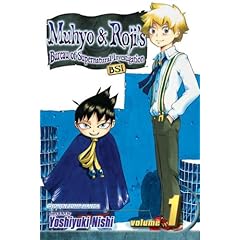
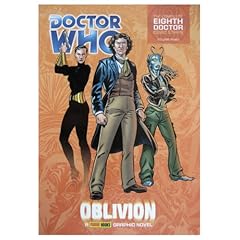
Here's how this works: I finish reading something, and I tell you about it, and I try not to bore you to death. This time, reviews, of sorts, of Muhyo & Roji's Bureau of Supernatural Investigation volume one (Viz, 2007) and Doctor Who: Oblivion (Panini, 2006).


I was mentioning last week about how I bought lots of stuff from the AWA dealers' room. This was one; I spotted the cover and figured, correctly, that my eleven year-old son would enjoy it. Muhyo & Roji's BSI, which concluded a seven-year run in Shonen Jump earlier this year, is simply perfect for his reading bracket, but it really failed to gel with me. Detailing the reasons why the drama failed for me would be like kicking a Goosebumps book for not providing a really good resolution to its teenage wolfman story, or a Harry Potter book for any one of its tedious moments. This isn't intended for grown-ups.

The stories by Yoshiyuki Nishi reach their high points with the revelation of the horrific beast-of-the-week, a critter which will then be instantly and effortlessly dispatched by Muhyo. The art isn't at all appealing, although Nishi has a fine sense of pacing the horrific buildup to each episode's new monster. I won't be continuing with the series, although my son has expressed an interest in picking them up himself. Recommended for middle schoolers.


Continuing to work my way through the complete comic adventures of the Eighth Doctor, I was very pleased to reread this third volume, which starts with one of the best bait-and-switches that Doctor Who has ever pulled, when a new character who seems to be the obvious new companion pulls the twist that you should have seen coming, but then there's a follow-up to that which is still, after all this time, chuckle-inducing in its audaciousness.

"Oblivion" is a really good set of excellently-told stories, ably mixing plot threads from both the earlier comics and the original TV series and presenting a Doctor that we never got to know as well as we should have. And I tell you, if there's a finer Doctor Who moment than when the ghost of Frida Kahlo's father menaces the Doctor's companion, while he's in a graveyard with Diego Rivera on the Day of the Dead fighting aliens, I can't think of it. Highly recommended.

(Originally posted November 03, 2008 at hipsterdad's LJ.)

Tuesday, October 7, 2008

Time Lords and Showgirls

Here's how this works: I finish reading something, and I tell you about it, and I try not to bore you to death. This time, reviews, of sorts, of Doctor Who: Agent Provocateur (IDW, 2008) and Nevada (DC/Vertigo, 1999).


In 2007, IDW got the license to make Doctor Who comics for the US market, and decided that six-issue miniseries were the way to go. They got Gary Russell, who's been writing Who novels for ages, and feature stories for Doctor Who Magazine since the mid-eighties, to be their first writer, and parceled his six scripts among four artist teams, only one of whom, Nick Roche, depicts the manic energy of the David Tennant series with anything approaching the job I'd like to see done. The other artists are at best passable.

"Agent Provocateur" is weighed down by a remarkably complicated plot and a giant cast of supporting characters, but where it is weighed down the most is in the dialogue. Certainly, Tennant is the Motormouth Doctor, but there has to be a better solution to accurately write for him than filling the most overpacked word balloons you've ever seen on a comic page, leading me to understand at last what the expression "tl,dr" means. Seriously, they were making editorial cartoons a hundred years ago that were easier to read than this mess. Not recommended.


Steve Gerber's fiction has been so important to me over time that, the first time I ever looked back at my own work and realized that I had unconsciously ripped off somebody's work for Marvel Comics - as opposed to intentionally cribbing from somebody like all kids learning to make comics do - it was this soul-crushingly embarassing eight-page proto-GMS Legion episode I did when I was thirteen. It had something to do with a character having a terrible nightmare for some forgotten but critically important reason, reminding him of some nebulous philosophical lesson. About two months after I wrote it, I realized I'd pulled it straight from one of Gerber's Adventure into Fear episodes about a nebulous philosophical lesson that I didn't understand then, either, but I'd somehow subconsciously come to understand that these were the sort of stories that comic books were supposed to tell. Ashamed of my theft, the notebook paper episode in question was crumpled into a ball immediately afterward.

Nevada has been the first Gerber story that I've reread since he passed away earlier this year. Originally published as a six-issue miniseries by Vertigo in 1998, and preceded by an oddball one-off episode in one of that label's periodic anthologies, it is the story of a Las Vegas showgirl and her pet ostrich getting caught between dueling cosmic forces with an interest in our reality, while the management of the hotel where Nevada performs deals with a rash of grisly murders.

Honestly, it's not a complete success. Episode five is really nothing but nebulous philosophical lessons, but you can certainly look at the many examples of Gerber working through his issues with our existence by putting comic book characters through an emotional wringer and railing at someone who claims to be their creator, and see a vision throughout his work quite unlike anybody else in the medium. While this stuff may be a bit heavy for many readers, Nevada herself is an oddly engaging character, despite her abrasive personality and distance. The police procedural stuff, from investigating the grisly murders to questioning a homeless, drunk former academic - a foreshadowing of the Dr. Fate revival he was working on when he passed - is really interesting stuff. Frankly, I found Nevada's cosmic resolution a small disappointment compared to the human possibilities and potentials that the plot promised, and I use "human" with the caution flag of one antagonist having a lava lamp for a head.

Nevada never returned after this outing; I suppose it didn't sell enough to warrant a follow-up, which is a shame. Despite her short shelf life and cosmic detour, Nevada was a classic Gerber character and we're better for having met her. Recommended for mature readers.

(Originally posted October 07, 2008 at hipsterdad's LJ.)

Monday, September 22, 2008

The Two Doctors

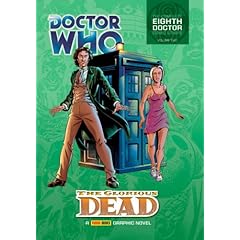
Here's how this works: I finish reading something, and I tell you about it, and I try not to bore you to death. This time, reviews, of sorts, of Doctor Who: The Glorious Dead (Panini, 2006) and Doctor 13: Architecture and Mortality (DC, 2007).


I've been rereading the complete run of Eighth Doctor adventures (sidelining, for now, the most recently released World Shapers), and grudgingly have to admit that this one is the weakest of the four collections. That's not to say it's without a great deal of charm, as two light-hearted one-offs, each illustrated by Roger Langridge, demonstrate. Langridge also got to tackle a three-part story called "The Autonomy Bug" which concerns a hospital full of incarcerated robots who might be demonstrating sentience, and this brilliant little lump-in-the-throat story is as good as Doctor Who ever gets. Scott Gray handles cliffhangers amazingly well; there's a moment where the same guy that we've been thinking is an alien time traveller wakes up in bed with his friend Grace Holloway having dreamt the whole thing, and that's just flooring. But heavens, the titular epic, all ten agonizing parts of it, evokes the worst of bloated Marvel storytelling, with two opponents locked in a battle of wills for some nebulous, reality-shaping MacGuffin. Even without the specifics, it feels overly familiar and unsurprising. Recommended with reservations.


DC Comics has published thousands of stories featuring thousands of characters over the decades, but every so often they revise their internal continuity into one squished order of things, and some worlds, tales and oddball characters devised by creators no longer actively working don't find favor, and therefore don't find a place in the new scheme of things. Doctor Thirteen was one of these guys, a short-tempered loudmouth ultra-skeptic, sort of what you'd get if James Randi started acting like Sean Hannity. But he was trying to tell a world of Phantom Strangers, Supermen and Sandmen that there were no such things as ghosts, aliens or other-dimensional superbeings, and that simply stopped making sense a long time ago.

Brian Azzarello's weirdly compelling little story receieved enough positive reviews for me to want to read it, and I'm glad I did, even if I knew too much about it going in. Heaven only knows how much more I would have enjoyed it had I been following its original appearance in 2006-07 in a miniseries anthology with the top-billed The Spectre, a comic I still have no interest in reading. Suffice it to say that over the course of the series, with the assistance of several other timelost fictional properties who are also on the losing end of the argument as to whether they should "exist," Dr. Thirteen learns a lot more about his odd place in his even odder universe, and Azzarello doesn't mince words letting the "architects" of the current DC Universe know that whatever hard-and-fast rules they'd like to nail down for their playthings, they'll just be rewritten by somebody else in fifteen years. The art by Cliff Chiang is just gorgeous; I wish they'd get that guy on a book that I'd like to read. Highly recommended.

(Originally posted September 22, 2008 at hipsterdad's LJ.)

Friday, September 12, 2008

Love and Look-In

Here's how this works: I finish reading something, and I tell you about it, and I try not to bore you to death. This time, reviews, of sorts, of Amor y Cohetes (Fantagraphics, 2008) and The Best of Look-In: The Seventies (Prion, 2007).


Having assembled all of the Hernandez Brothers' Palomar and Locas stories from the first fifty issues of Love & Rockets across six unmissable volumes, Fantagraphics has most recently compiled all (or at least most) of the remaining odds and ends from that comic into a big anthology volume called Amor y Cohetes.

I think it would be simple and repetitive to cough up a list of what all's in this book because content rundowns are available just about everywhere you look. In fact, you can follow the Amazon link in the image for two, and there you'll find an comparison I certainly enjoy. It's like a B-sides and rarities collection, the Hernandez version of Dead Letter Office. Some of these comics are amazingly self-indulgent and showy, some are very clever, and at least one - Mario's "Somewhere in the Tropics" - is completely stunning.

There's also this demented, stream-of-consciousness installment called "Hernandez Satyricon," in which Gilbert uses Jaime's "Locas" characters in a rambling, nutball, nightmarish sci-fi tale. At one point, all of the characters swap genders, allowing Gilbert to ever-so-briefly give us Hopey & Maggie yaoi. Well now. Recommended for mature readers.


I first learned of this collection shortly after I posted my Reprint This! feature on Sapphire & Steel. Look-In was a long-running magazine for teens and preteens in Britain, one that mixed comic strip action with features on the week's TV offerings and the current flash-in-the pan pop fad. I have a few issues, and so I certainly enjoyed Lew Stringer's recent look back at the title.

The thing about the seventies is that you still aren't sure elements of them ever really happened. This compilation book finds room for an article about a new series of interview LPs, with the host of some yoof-teevee program interviewing the likes of Gary Glitter and the Sweet for a monthly record release. And then there's Flintlock. The only reason anybody ever heard of Flintlock, a boy band which followed the Bay City Rollers' playbook and troubled the top 30 exactly once, is that their drummer was one of The Tomorrow People. And yet they're all over this book, with concert reports and a comic adventure. Somehow the editors also found room for a two-page feature on Our Kid, who don't even have the Tomorrow People connection. Roxy Music only gets a half-page.

Anyway, the comics of course reprint a Tomorrow People story, along with multi-part adventures of Black Beauty, The Bionic Woman and Sapphire & Steel. Artists on these stories are John Burns, Mike Noble, John Bolton and Arthur Ranson. There are other comics as well, including generally unfunny humor strips based on Man About the House and Benny Hill and a lightweight ABBA biography which reads as even more woeful in the wake of the Gilbert Hernandez bio of Frida Kahlo in Amor y Cohetes.

And it's full of old ads, for Doctor Who Weetabix (some sort of British breakfast cereal, I think) and Six Million Dollar Man dolls. I think this book is incredibly fun and proved to be a very silly read, particularly when some award ceremony from 1977 gives The Tomorrow People a "best drama" nod, and The New Avengers "best family programme." (Shurely shome mishtake!) That said, I kind of think you need to have been born prior to 1980 to find much charm in this.

And we're still waiting for proper compilations of all the comics, without interruptions by articles on the thrilling new hobby of badge collecting. Make it so, Prion!

(Originally posted September 12, 2008 at hipsterdad's LJ.)

Monday, August 4, 2008

Doctor Who and Hembeck

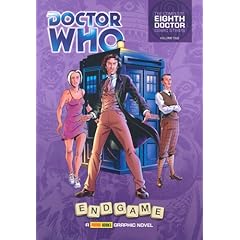
Here's how this works: I finish reading something, and I tell you about it, and I try not to bore you to death. This time, reviews of Doctor Who: Endgame (Panini, 2005) and The Nearly Complete Essential Hembeck Archives Omnibus (Image, 2008).


That eyepopping cliffhanger from the end of the last Doctor Who season evoked an earlier stunt that the comic had pulled. The time was 1997, and conventional wisdom, much as people (like me!) who enjoyed Paul McGann's Eighth Doctor would prefer it to be otherwise, was that the '96 TV movie was a franchise-killing failure. Nevertheless, when the comic took the massive, unannounced step of regenerating the hero, and giving us a new, Ninth Doctor, one "played" by actor and producer Nick Briggs, it was a big shock. There was an accompanying photo feature of our new, balding, tea-obsessed leading man in his eccentric costume with a toothbrush in his jacket pocket. Since the wheeze wasn't revealed for four months, during which the real Doctor had been busy behind the scenes disrupting the plans of the villainous Threshold, there was plenty of time for an outraged fandom to fill the letters page and the old Usenet group with angry screeds.

Those were great times, and these are great comics. Most of them are scripted by Alan Barnes, and I suppose my only quibble is that the Threshold bunch are pretty obnoxiously snide, but I guess they wouldn't be decent baddies if you weren't sneering when you read them. Martin Geraghty's pencils are inked by former 2000 AD art editor Robin Smith, and while I've never been a fan of Smith's solo work, he really pulls off some great work here as part of a team. But the nicest thing about the Eighth Doctor's comic life - as convoluted and/or expensive as the other options, it's the one that I choose to think that matters most - is that the later volumes, to be reread soon, are even better. Recommended.


This is such a huge, fun book. It's funny, but you sort of know going in that it's a 900-page monster, about as thick as two of Marvel's earlier Essentials combined, and still it's a surprise just to see the thing. And since Hembeck can fill a page with lettering better than anybody else in the industry, you will definitely get your money's worth from this book.

But what is it? Well, if you know American comic fandom, then you'll surely know Fred Hembeck, who's been lampooning and celebrating the medium for about thirty years in the pages of various fan publications and APAs, by way of mini-histories, interviews with fictional characters and recreations of classic moments from comics, all done in his inimitable style. This is an exhaustive collection of damn near everything that can be collected, in one mammoth book.

It's tremendous fun, but certainly not the sort of thing you can breeze through. When Hembeck gets on a joyous rant, with his cartoon alter ego and Dr. Strange, for instance, trading tales of Steve Ditko highlights, the page can become unbelievably dense with dialogue, with more words appearing on a single page in this book than in an entire issue of Brian Bendis's Avengers. And the reproduction is smaller than in the larger magazines where these originally appeared, so you'll want good lighting and possibly a lens to read some of this stuff!

What makes this a winner all the way through is Hembeck's genuine love and respect for the medium and its creators. There are certainly books he's enjoyed less than others, but you really get the impression reading this of a guy who wants to share his enjoyment, and toast the often unsung creators behind comics. It's very Ameri-centric, unsurprisingly, but it's far more than mainstream superheroes; everything from Little Lulu to Preacher gets some page time within these covers. That brings me to my only real complaint: it's absurd that a book this thick should be published without page numbers! It's also a sad reality that a book this thick will soon have livid cracks running up its spine, but a two-volume slipcased hardcover probably wouldn't sell as well... Well, until the day my volume falls apart, it'll have a place of pride on my shelf. You won't be able to miss it; I don't know that I have any other books this thick!

(Originally posted August 04, 2008 at hipsterdad's LJ.)

Sunday, February 10, 2008

Doctor Who: Voyager and some Andrew Clements novels

Here's how this works: I finish reading something, and I tell you about it, and I try not to bore you to death.


This book's flawed to an aggravating degree, because while the plots are pretty solid, the stories are entertaining and John Ridgway's art is fabulous, at no point does the main character appear anything like the Sixth Doctor. There's a good reason, or excuse, for this: because the producer of the Doctor Who TV series wanted all the ancillary merchandising to reflect Colin Baker's Doctor from the moment he first appeared onscreen towards the end of the 1984 season, the first chunk of episodes in this book were written before his character had been seen. And then he was seen in a story shown across two weeks which depicted him as delusional after his stressful regeneration, so all the rest of the episodes (twenty in all) were written with only a vague idea how he should be portrayed. So Colin's Doctor - the loudmouthed, egotistical perfect children's hero, railing at maximum volume - isn't present here at all. They're still good enough stories, and a long arc of episodes dealing with an ancient, insane Time Lord criminal who's trying to escape the attentions of an Eternal called Voyager, are periodically brilliant, but the uneven characterization and the insanely high price tag - $32 for 170 BW pages - make this a recommendation only for collectors.


I've been remiss in telling my fellow parents about Andrew Clements. I've been very fortunate to have children who enjoy reciprocating the reading they've uncovered on their own with me, and about two years ago, when I mentioned that the plot of Frindle, in which a schoolkid demonstrates the foolish, arbitrary nature of words by coming up with a new name for what we call a "pen," sounded like a neat idea, the Hipster Son asked if I wanted to read his copy. Since then, he's checked out or bought five other Clements novels and passed them to me when finished.

There's a degree of repetition in Clements' basic plots - an elementary schoolkid finds some reason to question the status quo - but there's an incredible variety in where the stories lead from there, making these perfect reads for later elementary and early middle-school students. Sometimes the young heroes earn major victories, but sometimes, as in The Last Holiday Concert, their victory doesn't change an inevitable, downbeat reality. In others, like The Janitor's Boy, there's little to change beyond the understanding that sometimes even parents can have their souls crushed by inevitability.

The best of the Clements novels I've read is the one I just finished, The Landry News, in which a girl starts an underground newspaper and finds a surprising ally in the teacher against whom she spoke out in an editorial. Alternately hilarious and heartbreaking, it's a great story told exceptionally well. If you've got kids, or if your friends do, I can't recommend Clements highly enough. Your kids will eat these stories up, and if you've got a spare hour, you'll read right along with them.

(Originally posted February 10, 2008 at hipsterdad's LJ.)