Showing posts with label frazer irving. Show all posts

Friday, May 6, 2011

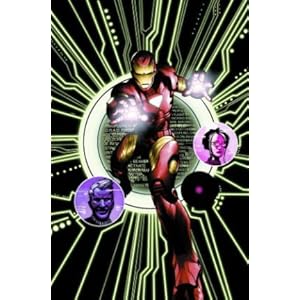
Iron Man: The Inevitable

What I try to do with reviews at this Bookshelf blog is keep it simple and spoiler-free, and let you know whether I'd recommend you pick up a copy of what I just read. Seems to work okay. This time, a brief review of Iron Man: The Inevitable (Marvel, 2006).


Now here's a book that's just all kinds of terrible. I don't actually own any Iron Man comics other than this one; even as a kid, Iron Man was never much more than The Boring Avenger, and his was a comic book that I studiously avoided. I thought the first movie was a heck of a lot of fun, but we never got around to going to see the second one. But here's a book that I bought - all six issues - because I really do love the artist Frazer Irving, and this was, I believe, his first job for one of the big American companies.

I knew Irving from his exceptional work for 2000 AD and the Judge Dredd Megazine in the early part of the decade. Apart from some occasional one-offs and fill-in jobs, he illustrated series and serials like The Simping Detective, Storming Heaven and A Love Like Blood. He kind of got saddled with a lot of strips that were too short to make any real impact other than the visuals, which were usually quite amazing. And then he got poached.

I think that now, I've been burned enough by creators leaving 2000 AD and going to write and draw massively inferior garbage for American companies. As far as I can see, it's only been Grant Morrison and Andy Diggle who've gone on to genuinely better things for DC and Marvel. Even Alan Moore. I own a stack of Alan Moore comics that reaches about up to my chin, and not one of them is better than Chronocops. So, as part of my scaling back on everything, even if an extremely high-paying job were to land in my lap and I become able to resume buying comics at the volume that I did at my peak, I'm not touching any of this trademark-protection crap that my favorite creators keep spinning for American superheroes. None of it. This could be the greatest Iron Man comic ever, and it would still stink, and while I'm certain that Frazer Irving and his family greatly enjoy the larger paychecks that Marvel and DC can offer him, supporting this work means purchasing deeply mediocre, stupid comic books for far too much money just to see some good art. You have to read this dumbass story to look at it. We should quit applauding creators acting like they've been called up to the majors when they get a six-issue miniseries about the Living Laser, and instead support the infinitely more creative fields where they have been succeeding enough to make THOSE the financial goal.

In a perfect world, in other words, 2000 AD should sell enough for Rebellion to be able to pay its creators so much money that the idea of leaving to illustrate a comic book as moronic as this would be laughable. If creators were taking a pay cut to do work like this, the work would not have happened.

This Iron Man comic, like damn near everything I have seen from Marvel in the last ten years, is an overlong, bloated bore of continuity and characters that don't develop. Scripted by Joe Casey, the story might have made for an acceptable two-issue fill-in back in the Marv Wolfman and Gene Colan days, but in 2006, it somehow required the services of a separate six-issue miniseries running alongside the regular monthly Iron Man comic. The plot concerns two of Iron Man's enemies teaming up to take him down, while, in his civilian identity of billionaire industrialist Tony Stark, our hero has hired a new ladyfriend, a psychoanalyst, to try and make contact with a third enemy. In a previous storyline, this baddie had been converted to pure energy, and now Stark has invested squajillions on some new technology to entrap the energy-baddie and have some way for the ladyfriend to communicate with his weird new energy form. Six issues. Remember when that meant, "Whoa, this is an epic"...?

Like a lot of melodramatic comics - and 2000 AD's not immune to this - some of the ostensible high points come with last-page revelation cliffhangers. Part one ends with the big arrival of The Ghost, redesigned by Irving to look much more awesome than his solid, caped Heroclix incarnation and more like the weird, insubstantial outline of that anti-matter fellow in the Doctor Who serial "Planet of Evil." Part two begins, however, with countless pages of the two villains talking. It turns out that one of the villains is actually the third to take the name of Spymaster and wear his armored suit. He yammers a lot about being a "legacy" villain. I suspect that Casey is a clever enough writer that this is a parody of the ridiculous continuity-obsessed comics scripted by Geoff Johns, where evidently insane people punch each other over who will have the right to be the next Star-Spangled Kid, but it's still five pages of people in silly costumes talking about what it means to be the new Spymaster.

I confess that I did not actually read this comic when it was first published. I saw that Irving was drawing this book and went ahead and ordered it from Bizarro Wuxtry, Earth's finest comic book store, because I (then) wanted to support the artists that I enjoyed. I never actually found the time to read it, figuring that it could wait until I had all six issues. And then... I just never found the hour or so I needed to do it, until, purging comics, I decided to give this a try before I give it to Scottish Rite for some sick kids to read.

I suppose about 45,000 people bought this comic. For what it's worth, I regret that I shoulder 1/45,000th of the blame for this being successful enough for Marvel to offer Irving more work and steal him away from drawing more Simping Detective, which is 45,000 times more entertaining than this dull, boring and stupid but well-drawn comic.

Tuesday, September 14, 2010

Seven Soldiers of Victory Volume One

What I try to do with reviews at this Bookshelf blog is keep it simple and spoiler-free, and let you know whether I'd recommend you pick up a copy of what I just read. Seems to work okay. This time, a brief review of Seven Soldiers of Victory Volume One (DC, 2010)


When DC first announced Seven Soldiers of Victory, a proclaimed "mega-series" written by Grant Morrison, I was equally excited and skeptical. The superhero publishers often promise that their big crossover epics will be both self-contained and understandable, and they invariably disappoint. The notion here was that, over thirty (!) chapters, Morrison would tell an intricate, interweaving story across seven 4-issue miniseries and a pair of bookend specials. The plan was that readers who only wished to try out one or a couple of the miniseries could have a fully-told experience with no loose ends or confusion, but readers who bought all thirty chapters would have a really amazing read, seeing plot strands from the various stories weave in and out of each other.

There was very little reason to think that this could work. Even accepting that this was Morrison, writer of most of the best superhero titles of the last twenty years, DC Comics just isn't set up to succeed on this level. Whether through poor editorial control or last-minute artist swaps or unannounced tie-ins forcing readers to buy extra comics just to understand what the heck is happening in the funnybooks they've already paid for, this publisher repeatedly drops the ball. Morrison was the architect for just about the only line-wide crossover that I can remember ever enjoying, the high-concept One Million, and DC couldn't even compile a collected edition of it without leaving out a chapter necessary to understand the story's epilogue.

So it was both a relief and an absolute shock to watch Seven Soldiers unfold and it turn out to be one of Morrison's five or six best stories, ever. It's amazing, wild and wonderful, and I find more fantastic connections and hidden treasures each time I read it.

The story takes its title from a 1940s DC trademark, in which seven wartime costumed heroes would beat up Nazis and protect the homefront from spies and saboteurs and fifth columnists. Over time, nostalgia-minded writers and editors would revisit the concept - Geoff Johns seemed particularly interested in it - revising the lineup and the details to fit the ongoing DC continuity.

In the one-off issue that kickstarts the epic, one of the aging, surviving Soldiers assembles a new team of seven wannabes to revisit an old case that his fellows had tackled in the '40s. (There's some comic book hocus-pocus explaining how said Soldier isn't well past "aging" and into "ninety-some years old," but don't worry about it.) This new team of Seven Soldiers meets a spectacular, unbelievable end at the hands of a brutal and amazing foe, a timejumping race of extradimensional insect-riders called the Sheeda. It's a terrific issue, illustrated by J.H. Williams, which does a great job setting up a new group of engaging and entertaining characters as the heroes and then one-ups them with the half-seen, stunning villains of the piece. Somewhere, there's an alternate universe where Morrison has been writing Doctor Who and using the Sheeda as the villains there and the whole planet is enthralled.

So, humanity's salvation comes down to a new team of Seven Soldiers, who (a) do not know that there is a mutual threat against civilization and (b) do not know that they are a team and (c) do not meet each other. Morrison's new Seven Soldiers are a mix of new characters who take the names of older DC properties, revamped versions of older characters and, at least in the case of the stage magician Zatanna, slightly new takes on existing continuity. Each gets a four-issue miniseries to tell their tale.

This new hardback collection of the first half of the epic reprints the Shining Knight and Guardian stories in full (illustrated by Simone Bianchi and by Cameron Stewart), as well as most of the Zatanna and Klarion stories (drawn by Ryan Sook and by the awesome Frazer Irving), along with the one-off introduction. It's incredibly fun. I had always reread each miniseries on its own between the bookends, but coming to them in staggered order like they are printed here reveals patterns and repeated memes between the adventures, tying things together masterfully. Zatanna and her apprentice visit the scene of a battle staged in the Shining Knight's adventure, and meet a man who is referred to in the Guardian's tale, which literally crosses paths with Klarion's during a chase scene on a New York subway line. This is perhaps my fifth time reading it, and I'm still finding new details that I'd missed before.

This is the third publication of the story, which originally ran as thirty single issues published in 2005. There was a four-volume trade paperback collection in 2006-07, which, in a rare attack of common sense, your favorite Hipster Dad did not purchase, and now this very nice hardcover. DC chose an unfortunately thin paper stock, but it's otherwise a nice-looking book, with a small section of design sketches rounding out the fifteen chapters. It's great fun, and ranks between All-Star Superman and New X Men as my pick for Morrison's most engaging and wild work of the last decade. Of course it is highly recommended, but now the next question is whether to dig out the next fifteen issues from their comic box, or wait until the second hardcover is released later in the year. Decisions, decisions.

Monday, July 12, 2010

The Mystic Hands of Dr. Strange

What I try to do with reviews at this Bookshelf blog is keep it simple and spoiler-free, and let you know whether I'd recommend you pick up a copy of what I just read. Seems to work okay. This time, a brief review of The Mystic Hands of Dr. Strange (Marvel, 2010)


Well, here's the most interesting thing I've heard of Marvel publishing in a long time. I got the world late that the wonderful Frazer Irving had some artwork in this new anthology book, so I swung by the closest comic shop to me on my way home last week to have a glance at it, and liked the book so much I bought it to read at length. This was a good choice on my part; it's a splendid little one-shot, and one definitely worth picking up yourself.

The book is an homage to the old black and white Marvel magazines of the seventies, only published in a traditional comic book size. It features four short stories about Greenwich Village's sorcerer supreme, with stories and art by Irving, Kieron Gillen, Pete Milligan, Mike Carey, Ted McKeever and Frank Brunner. That's not at all a bad lineup of talent.

The comics, sensibly, are free from Marvel's tangled continuity and just tell cool adventures full of demons and double-dealings. It was a really fun read and I just wish Marvel could publish stand-alone books of this sort regularly. Recommended.

Friday, April 11, 2008

Mutant Bounty Hunter edition with Strontium Dog and Durham Red

Here's how this works: I finish reading something, and I tell you about it, and I try not to bore you to death.


Absolutely triumphant. There's a reason this is one of the Eagle Award nominees for best reprint volume of '07: it's absolutely the work of three creators at the top of their game, telling brilliant stories with a mix of lighthearted wit and downright mean energy. Wulf Sternhammer's death really was a shock at the time; what's even more shocking in retrospect is the impact it has on Johnny Alpha, who becomes a taciturn, vengeance-driven monster for many episodes thereafter. The revenge he takes out on Max Bubba is the sort of thing that superhero funnybooks just wish they could get away with. Highly recommended!


This is the last of a three-volume series telling the story of what happened to the sexy vampire bounty hunter Durham Red several centuries after she was last seen as a supporting character in Strontium Dog. It never really sparks, suggesting it would have worked better as two books rather than three, although Mark Harrison's art is never less than interesting.

What really makes this collection shine is the inclusion of the seven episodes of "The Scarlet Apocrypha," in which Dan Abnett reimagines the character in seven very different scenarios, with seven very different artists, throughout history and fiction. Only one doesn't work - Steve Kyte's Japanese animation parody is just stupid - but some of these are downright excellent. John Burns really shines depicting Red in the setting of a 70s Italian horror film, and Enric Romero has fun putting her up against Count Dracula. Steve Yeowell, Frazer Irving and Carlos Ezquerra also contribute great installments before Harrison returns with a fascinating, dense and fun story drawn in a completely different style from his standard - an imitation of Mad's Mort Drucker! - and set at a science fiction convention in a world where Durham Red movies have been sci-fi staples for decades. It's very fun stuff, and, packed as it is with background notes and production artwork, it's a package I have to recommend, even though the lead story left me a bit cold.

(Originally posted April 11, 2008 at hipsterdad's LJ.)

Tuesday, March 11, 2008

Storming Heaven and Box Office Poison

Here's how this works: I finish reading something, and I tell you about it, and I try not to bore you to death.


This is a collection of most of Frazer Irving's work for 2000 AD, including one Shaun of the Dead strip which actually appeared in a promotional comic. Not included are the long form stuff which has already been compiled, such as Necronauts, or the guest contributions to ongoing series. What is included certainly looks brilliant but is occasionally frustrating to read. John Smith's A Love Like Blood and Gordon Rennie's Storming Heaven are both too short to do justice to their high-concept plots, and oddly it's relative newcomer Simon Spurrier whose 30-page From Grace comes off best in this book, a fascinating little study of real evil borne of circumstance which reminded me of Gregory Maguire's Wicked, oddly enough. Recommended with reservations.


It took me forever, and a deeply discounted copy of Tricked, to try Alex Robinson. I should have sampled him earlier. He has a brilliant ear for dialogue, and in Box Office Poison, his first long-form story, he creates several incredibly vibrant, wonderful characters. I couldn't wait to find out what would happen to them. The story is quite sprawling at 600 pages, but generally it is about a number of post-graduates slowly making their way through life in New York City... one of them, Ed, takes a job assisting an aging cartoonist from comics' Golden Age who has been shafted by the company where he created a lucrative comic and film franchise. Is there a way for the old-timer to get the justice he deserves? This is threaded through a number of equally strong plots about noisy neighbors, ice skating, nowhere jobs, and I realize that sounds a little banal, but it's done with such style and such wonderful characters that you can't put this book down. Highly recommended.

(Originally posted March 11, 2008 at hipsterdad's LJ.)

Monday, January 7, 2008

The Simping Detective

Here's how this works: I finish reading something, and I tell you about it, and I try not to bore you to death.


This is a book for people who really love language. Simon Spurrier's amusing noir take on life in Mega-City One tackles some convoluted and twisted stories of crime and the clown on the mean streets who investigates it, but the plots are so strange, and so complex, that it is often difficult to follow the proceedings. His narration, on the other hand, is sublime. You can easily spend pages reading the amazing descriptions by the grouchy hard-boiled Jack Point before realizing that you lost track of exactly what it was Point was trying to tell you several minutes previously. If Spurrier's prose was poor, that'd be a problem, but it's told so well that it is worth the extra time spent contemplating the plot. And if you think that's not a compliment, you evidently haven't seen the Bogey and Bacall version of Chandler's The Big Sleep, which nobody can decipher either, but thrill to get lost in. Recommended.

(Originally posted January 07, 2008 at hipsterdad's LJ.)