Sunday, December 30, 2012

Shakara: The Destroyer

What I try to do with reviews at this Bookshelf blog is keep it simple and spoiler-free, and let you know whether I'd recommend you pick up a copy of what I just read. Seems to work okay. This time, a brief review of Shakara: The Destroyer (volume two, Rebellion, 2012).


I am in a very small minority of 2000 AD readers when I say this, but good grief, Shakara slowly rumbled its way to an overlong and frankly conventional conclusion. It shouldn't have been like this. The second and third adventures for this weirdest of protagonists - a skinny, long-limbed, ultraviolent red-eyed beast inflicting almighty hell on a galaxy of equally weird antagonists - were joyful in their embrace of the bizarre and the outlandish. This was a series that was as unconventional as it was gorgeous.

Henry Flint, given the chance to draw a universe of incredibly weird, inhuman beings and technology, shined on every page, thanks to the writer, Robbie Morrison, trusting him to design and execute all of his wild concepts. Engine-driven planets, black hole hand grenades, clones from a million different dimensions, eyeball brains sitting in meditative repose over gangly shoulders... this was a series not at all afraid to think big and deliver.

And this made its perhaps inevitable decline all the more tragic. Shakara was a series that didn't provide many answers. All we needed to love it was to have a company of cyborg tyrannosaurs for the red-eyed screamer to slice in half. What we emphatically didn't need was for the red-eyed screamer to be met by a blue-eyed talker. No, sadly, the third story ended with the surprise appearance of a weird blue-and-black critter who was kind of like our protagonist, and the fourth explained, ad nauseum, that he was the true, lawful descendant of the long-dead Shakara race. As villains go, Cinnabar Brenneka was just about the most long-winded one possible.

David Tennant's third series of Doctor Who ended with Davros and the Daleks planning a convoluted thingumajig to end all of creation with a reality bomb or some such silliness, and, damnation, a dying Shakara in the fifth story is bent on stopping Brenneka from executing the same dratted thing. The comic looks beautiful, and there are ample sidebar weird concepts like an infinitely large arsenal hidden in a tesseract and a prison planet that terraforms itself to kill anybody sentenced to it, but at its core, this is a disappointing story about a bad guy who talks too damn much and speaks in the hoary language of generic sci-fi baddie. Very little here, in point of fact, hasn't been written before. It's recommended in small part for the artwork, because it's not much like anything ever seen before, at least.

Thursday, December 27, 2012

A Certain Justice

What I try to do with reviews at this Bookshelf blog is keep it simple and spoiler-free, and let you know whether I'd recommend you pick up a copy of what I just read. Seems to work okay. This time, a brief review of A Certain Justice (Faber & Faber, 1997).


I first read A Certain Justice shortly after it was released, at a time in my life when I was getting a little exhausted with the detective fiction genre. I was, in retrospect, too reliant, then, on the "British lady" school, with little variety to keep things interesting. But another problem that I had with the book was that I simply couldn't understand the setting. All the business of barristers and chambers and the attendant office politics had me baffled. Subsequent attempts at the story just had me rolling with it, accepting that I'd never understand this business.

Since I last read this novel, I happily made a terrific decision. I watched several episodes of Rumpole of the Bailey, and read some of the adaptations and sequel stories by John Mortimer. While the whole world of barristers remains quite strange to American eyes, this novel now makes a lot more sense. Mortimer's influence has been so strong, in fact, that I "cast" the actress Patricia Hodge in the role of Venetia Aldridge, who, just as her life is spiraling out of control, is found dead in a Grand Guignol tableau, with fresh blood poured, long post-mortem, over her head and one of those oddball wigs that English law fetishizes.

All the typical Dalgliesh traits and tropes are here in this book. The chambers office and Aldridge's home life are both incredibly insular and overprotective communities full of secrets and privacy, and the Met's powerful commander is righteous, calm, and frightening in his destruction of every barrier put up to protect the desires of the dead. I love the character; he's like a force of nature bending and breaking everything into something open and respectful. Recommended, after a short introductory course of Rumpole.

Tuesday, December 25, 2012

LSH Reread, part nine

(Covering Legion of Super-Heroes vol. 2 # 324-325, vol. 3 # 13-16, and Annual # 1, 1985)

Major developments:

*The Kryptonian Dev-Em is captured and cloned by the Dark Circle. It is revealed that their entire region of space is populated by clones of five people.
*Officer Gigi Cusimano's short fling with Sun Boy has become both fodder for the gossip columnists and not entirely good-natured putdowns from Chief Zendak. It looks like she's taking up with Dev-Em after the Dark Circle's threat is nullified.
*Timber Wolf, along with Karate Kid's sensei, arrives on the sadistic planet Lythyl to fulfill his old friend's last request: to literally plant a seed in the planet which will eventually lead to the downfall of the corruption that runs it.
*Violet comes on strong to Sun Boy. Nobody in the galaxy predicted this. They later attend Graym's christening as a couple. Vi gives Yera a totally uncalled-for stinkeye before the service.
*Five new Legionnaires are inducted: Magnetic Kid (Cosmic Boy's younger brother), longtime Substitute Hero Polar Boy, the non-humanoids Tellus and Quislet, and the mysterious Sensor Girl, whose identity is unrevealed but comes with a strong recommendation from Saturn Girl.
*The five new members are immediately abducted in a trap by Dr. Regulus in another bid for revenge against Sun Boy.
*Following an attempt on Laurel Kent's life, the team discovers an unusual conspiracy. Kent, a student at the team's training academy, is a descendant of Superman. Brainiac 5 notes similar recent attempts, some successful, to kill the descendants of 20th Century heroes, including the Flash and Hawkman, and deduces that one of the Justice League's old enemies has been waiting in cryo-sleep for ten centuries and sending robots to periodically attack the families of the old heroes.
*Speaking of the 20th Century, Brainiac 5 mourns the 1000-year anniversary of Supergirl's death. He'd been crushing on her for years, of course, but it wasn't until her death in the pages of Crisis on Infinite Earths # 7 that month that readers learned what he'd always known: the time of her inevitable death.


Some background scientist observes that Brainiac 5 mourning his longtime crush, Supergirl, makes as much sense as grieving over the death of Helen of Troy. She's not quite right, but it's an interesting observation. In one sense, this is the point where LSH starts to take an inevitable slide, trapped as it is by the ironclad rule of DC Universe continuity. This is a shame, because here's a great run of comics, with the anchor point being the arrival of five new Legionnaires, the most to join the team at one time in... maybe ever?

Paul Levitz is going to spend the next few years trying to figure out what to do with Magnetic Kid, who is Cosmic Boy's younger brother. Polar Boy is an interesting case. When he and the rest of the original Substitute Heroes were devised, his snow-and-ice power was made to seem silly and useless. Then Jack Kirby and Stan Lee came along, invented Iceman of the Uncanny X-Men, and made those powers practical. So everybody kind of had to admit that there was no reason for him to have been relegated to the Subs.

The team gets its first two non-humanoid-shaped members with Quislet, a small energy being who zips around in a baseball-sized "spaceship," and Tellus, a big, lumbering, telepathic whale-walrus dude whose real name, magically, is Ganglios. Tellus is his(?) superhero name. And then there's Sensor Girl.

Some of this requires a little bit of hand-waving, what with all the Science Police / EarthGov / United Planets security clearance and everything, but while the active Legionnaires are considering whom to induct among all their applicants, Saturn Girl steps in and asks everybody to do her a favor. Vote in this mystery chick with blonde hair and a mask and what is, while very much a 1980s costume - measure her shoulder pads sometime - one of the absolute best superhero costumes ever. Whoever she is, she looks awesome. Decades later, once the continuity was kind of reset to sort of shortly after the end of volume three and this Legion was revived, some artist, Yildray Cinar, maybe, decided to redesign this classic costume and created instead the ugliest eyesore in comics. It was a shame. No, Sensor Girl, properly dressed in big shoulder pads, gloves, boots, cape and full-faced mask, her powers unexplained and her origins a deliberate mystery, is an absolute classic character. The next several months of people trying to figure out who the heck she is and what her powers actually are... this is a tremendously good subplot, and all kinds of fun.

But the Supergirl tragedy helps feed into this mystery. In time, Brainiac 5 will start to wonder whether the girl he loved has somehow escaped her death and is hiding out in the 30th Century. What really happened is much more mundane and real-world and will, in time, have huge ramifications for the title.

I kind of doubt anybody reading this doesn't know this already, but basically, in the mid-1980s, some very boring person at DC Comics concluded that their funnybooks were too confusing and too full of parallel universes and they should start over, if not from scratch, then close enough to it. They'd discard decades of baggage and unpopular continuity and make some big changes that should probably never have been changed, inspiring a few breath-holding child readers who would, one day, grow up to write comics, to swear that one day, if they ever had the chance, they would, in turn, "fix" all these unpopular and unnecessary "fixes" that DC was inflicting upon its characters and stories. One of these "fixes" was getting rid of Supergirl.

The Girl of Steel had first been devised in the 1950s, and despite a very troubled publishing history, she had been a huge success in merchandising and toy sales, and even had a 1984 feature film do some small business. But in the new "fix," Superman would truly be the last son of Krypton; its only survivor. He'd have no cousins, and no Bottle City of Kandor with a million shrunken Kryptonians living in his Fortress of Solitude. Supergirl had to go, leaving a dozen writers, as talented and as far afield as Peter David and Evan Dorkin, spending the last thirty years coming up with new versions of the character to keep the trademark alive and selling T-shirts while not letting Superman have any girl cousins. For a few years, there was a Supergirl in a white T-shirt, and for a few years, there was a purple blob who shapeshifted into the trademarked look, and for a few years, there was a Supergirl with firey angel wings, and, of course, all that anybody remembers is that "Supergirl is Superman's cousin."

But it's one thing to have Brainiac 5 mourn the girlfriend he never could really have on the thousandth anniversary of her death at the hands of the evil Anti-Monitor. It's about to be quite another to have him mourn somebody who... never existed?

The breath-holding children who write comics for DC today and seem to want everything to be like it was in the late '70s and early '80s, only, you know, more violent and bloodthirsty and unreadable, will sadly be shown, as this Reread unfolds, to have something of a point.

Monday, December 24, 2012

Absalom: Ghosts of London

What I try to do with reviews at this Bookshelf blog is keep it simple and spoiler-free, and let you know whether I'd recommend you pick up a copy of what I just read. Seems to work okay. This time, a brief review of Absalom: Ghosts of London (Rebellion, 2012).


Seven or eight years back, there was a successful and popular series in 2000 AD called Caballistics Inc. that followed the adventures of a gang of occult demonbusters. Among the supporting players in the series was an aging, alcoholic, hard-as-nails London copper called DI Harry Absolam, who took a keen interest in the team when he learned one of them was harboring a nasty demon.

Fast forward a few years. Caballistics' writer, Gordon Rennie, had stepped away from comics for a time to do some work in the video game industry. When he returned, quite welcome, to the pages of the Galaxy's Greatest, many people hoped that he would resume that series, and some others, and deal with the lingering subplots left behind. But he did what has, surprisingly, turned out to be a much more fun idea instead. He took that supporting character, brushed off almost every connection to Caballistics, even changing his name from Absolam to Absalom, just so everybody's clear, and made him the headliner of his own unrelated series. And good grief, does he ever carry it well.

Harry Absalom has got to be one of the least likely lead characters for an adventure story. Rennie, very ably assisted by Tiernen Trevallion on art chores, has gone back to the old ideal that 2000 AD's leads shouldn't be pin-ups. He appears to be in his late sixties and keeps a "purely medicinal" flask of some kind of spirit around, but it's strongly hinted that he's much older than he appears, and he's a lot meaner and tougher. Trevallion draws him with so much impact that somehow, this skinny, cancer-ridden old cuss, with dialogue that deliberately echoes John Thaw from TV's The Sweeney, appears to be the most intimidating copper in London. Put another way, if I had to go rounds with a comic book cop, I'd rather take the short experience of Judge Dredd's daystick than worry about what Absalom's going to do when he tells me I'm nicked.

Absalom heads a special task force assembled to enforce The Accord, a five hundred year-old diplomatic treaty between the throne of England and Hell. Unfortunately, Hell has a hard time keeping track of all its denizens, who often find themselves tempted to cause trouble on Absalom's manor. As we follow a new detective sergeant assigned to his force, we learn that there are creepy and occasionally timelost entities throughout the country. Some of them seem to want to behave or assist Absalom in keeping the peace, and others have mayhem in mind. Once again, Rennie is creating another big supporting cast in a deeply-layered story full of subplots. I hope we meet the weird undertaker with the strange eyes and - is that a brass plate in the back of his head?! - again very soon.

Absalom was an immediate hit when it launched in the summer of 2011. This collected edition compiles the first three stories from 2000 AD: two serialized adventures and a one-off. There's a fourth story, another one-off, currently available in the annual year-end bumper edition of the comic, Prog 2013, and fingers are crossed that Absalom will be back defending his manor in another serialized adventure later this year. It's a terrific series, and one which everybody would love to see much more frequently. Nobody would complain if this were given a seven-month residency. Absolutely recommended.

Friday, December 21, 2012

Tamara Drewe

What I try to do with reviews at this Bookshelf blog is keep it simple and spoiler-free, and let you know whether I'd recommend you pick up a copy of what I just read. Seems to work okay. This time, a brief review of Tamara Drewe (Random House, 2007).


I always enjoy reading collected editions of comics and seeing whether I can spot the breaks from the original publication. Here's one where I couldn't. Posy Simmonds wrote and illustrated Tamara Drewe, a contemporary take on the Thomas Hardy novel Far from the Madding Crowd, as a weekly strip in the Saturday edition of Britain's Guardian from 2005-07, with a book version soon following. It received a good deal of critical acclaim and attention, and, in 2010, there was a feature film adaptation that was either never released in the US, or buried so completely that nobody ever heard of it.

The story is set in a small Dorset village, where Nicholas and Beth Hardiman, a crime novelist and his long-suffering wife, run a little getaway for writers and try to hide their crumbling marriage. Into an increasingly taut situation, Tamara Drewe comes home to the village with the impact of a guided missile. She's recently undergone plastic surgery and is showing off her gorgeous face and body. She's working as a newspaper columnist and dating the drummer from a pop band, much to the horror of a local teen who adores him, and it doesn't take very long for a tangled mass of interpersonal relationships and jealousies to develop.

I really enjoyed this story. It's witty, and smart, and all of the very different characters are drawn with believable traits. The teens who take out their frustrations on Tamara's e-mail address book are really funny, and Simmonds gives readers as many reasons to enjoy and appreciate the cheating Nicholas as to hate him. It's a great depiction of small town boredom and dreaming, and beautifully drawn throughout. Owing to language and some nudity, this isn't for everybody, but it's happily recommended for older readers.

Wednesday, December 19, 2012

Brass Sun: The Wheel of Worlds

What I try to do with reviews at this Bookshelf blog is keep it simple and spoiler-free, and let you know whether I'd recommend you pick up a copy of what I just read. Seems to work okay. This time, a brief review of Brass Sun: The Wheel of Worlds (Rebellion, 2012).


Funny things can happen in just a few weeks. 2000 AD had one of its periodic jumping-on issues, with the first episodes of new or returning series, back in September and for a short while, everybody was agog over a brand new offering, Brass Sun by Ian Edginton and INJ Culbard. The artist has only done a handful of things for the Galaxy's Greatest, while Edginton has written hundreds of episodes of several ongoing series and serials over the last decade. Readers and fans were buzzing contentedly over this new project, and then suddenly, with only a murmur of advance hype, there was this remarkable twist in a Judge Dredd story called "The Cold Deck" - about which, more here next month - and everybody plum forgot about poor old Brass Sun, which was lost in a tidal wave of excited chatter.

While "The Cold Deck" certainly deserves the attention - does it ever! - I'd like to come back to Brass Sun before it's completely forgotten, because it really was an incredibly interesting and promising story. It's among several recent 2000 AD series to feature a strong female lead, in this case an inquisitive and tough teen named Wren who lives with her grandfather outside a mean, medieval city. The world is dominated by an ugly religious order and her grandfather, a former bishop who went into hiding with one of those heretical "telescope" things and a bad case of "open mind," has left Wren with a diary and clues to learn more about their world before it is too late. Their solar system, he knows, is a gigantic, full-scale clockwork orrery. And it is winding down.

To be honest, the early parts of this first story didn't appeal to me as much as I had hoped. As wild and fantastic as that concept is, and as welcome as it is to see a young female lead in this often very male-dominated magazine, the religious order that runs the planet of Hind Leg is just so unpleasant that I didn't enjoy reading it for a few weeks. The villain came straight from the school of stereotypes, a humorless bore who just puts all nonbelievers to the stake like several thousand fictional antecedents. I didn't want to see Wren triumph against this guy, because it meant having to put up with this guy. So I was pleasantly and thunderously surprised when he didn't make it past the first five weeks alive. This story had many more places to go, and much to do.

Edginton is doing a very good job letting us get to know the new characters that emerged after the narrative moved away from Hind Leg. There will be many to keep track of before we're done, but Wren, who's completely outside her experience but so firm in her convictions that she's exploring everything with an eye toward putting everything in its place, is very much the series' lead. Everything from the costume design to the big, expansive double-page spreads of cities and planets looks fantastic in Culbard's capable hands. The concept, along with Wren's characterization, evoked what felt like a never-made film by Hayao Miyazaki, and so I was especially pleased when we started meeting strange machines that looked like something from that director's film Castle in the Sky.

Interestingly, and happily, Culbard is said to be alternating stories with another frequent Edginton collaborator, D'Israeli, so we might conceivably get stories more frequently than the typical modern 2000 AD model, with its constant aggravating year-plus gaps between them. D'Israeli is apparently meant to be working on the second story early next year, possibly for publication in the early summer, which would be great.

Brass Sun is not yet available in a collected edition. The first story, "The Wheel of Worlds," began with a double-length opener and ran for twelve episodes. Clicking the image above will take you to 2000 AD's online shop, where you may purchase the issue with the first installment. Happily recommended.

Monday, December 17, 2012

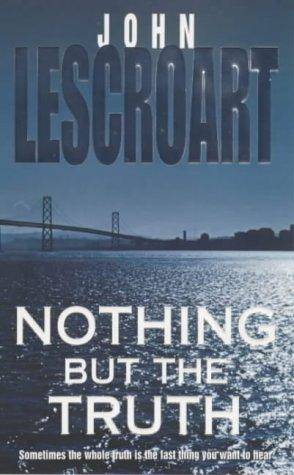
Nothing But The Truth

What I try to do with reviews at this Bookshelf blog is keep it simple and spoiler-free, and let you know whether I'd recommend you pick up a copy of what I just read. Seems to work okay. This time, a brief review of Nothing But The Truth (Delacorte, 1999).


I won't pretend that I was completely sold on Nothing But The Truth, another of John Lescroart's legal thriller mysteries featuring Dismas Hardy and Abe Glitsky. It certainly starts well. Dismas's wife Frannie has vanished. For several chapters, this is a scary book, punching home how weird and frightening it is when your spouse disappears. Then it gets even more frightening when we learn why: she had been subpoenaed by a grand jury looking into a murder, didn't tell her husband about it, got on the wrong side of a crusading ass of a district attorney who is massively abusing the power of a grand jury, and is finally able to phone home hours later after she's been jailed for contempt.

Frannie has always been shown to be a headstrong troublemaker, but I had a lot of difficulty believing that the Hardys' marriage has hit such a low point that she didn't want to tell Dis about the grand jury, and refuses to give up the murdered woman's husband's secrets. While she hasn't been having an actual affair with him, she's become too close a confidant, and, torn between guilt and loyalty, she clams up completely. Did I just not want to believe that Frannie's actions were that credible, or did I just not want to believe that these wonderful characters' marriage is in this much trouble? I'm not sure, but I didn't like either choice much.

Once Dis and Abe get involved with Bree Beaumont's murder, things get even more convoluted and exciting. The police have not gotten far, because the investigator assigned to it had been killed a month previously, derailing everything, and Beaumont's connection to the probable next governor of California is causing one roadblock after another. It's a wild tale with political shenanigans and domestic terrorists and a complicated business about gasoline additives. It's so well constructed that when an organization poisons San Francisco's water supply, which, in less capable hands, would feel like a contrived invasion from a much sillier book, it doesn't feel like anything more than the next natural step in a escalating sequence of events that is kicking innocents in the head along the way.

These aren't simple reads, and Lescroart's heroes' painful battles against City Hall leave me blinking and reaching for something lighter to chase each book as I finish them, but they're engrossing and thrilling, if not always fun. Recommended with reservations.