Showing posts with label frank hampson. Show all posts

Tuesday, November 9, 2010

Century 21 Volume 3: Escape from Aquatraz

What I try to do with reviews at this Bookshelf blog is keep it simple and spoiler-free, and let you know whether I'd recommend you pick up a copy of what I just read. Seems to work okay. This time, a brief review of Century 21 Volume 3: Escape from Aquatraz (Reynolds & Hearn, 2010)


I really, really didn't intend to buy this book.

Many months ago, Reynolds & Hearn released the first two editions in a planned ongoing series of reprints from the pages of the '60s British weekly TV Century 21 and its follow-up comics. These were tremendously successful comics for a few years - at the height of Thunderbirds-mania, the title was said to be selling a third of a million a week - but after a while, interest in Gerry Anderson's loosely-linked series ebbed. TV 21, as it was called after 1968, was canceled and merged with Valiant in 1970, having already absorbed its own two or three sister spinoffs. The last of the period Anderson strips, based on the live-action UFO, ran in the comparatively short-lived Countdown. Strips were later created for subsequent Anderson series like Space: 1999 and Terrahawks for the comic Look-In, but these are outside these reprints' purview, which ends with UFO in 1970-71.

What I said about the first two volumes was that they were interesting but deeply flawed. Certainly they're great reproductions of the original comics, on terrific paper, but I don't like the patchy, "best-of" way that the series are presented. For example, here in volume three, there are two Stingray storylines (21 episodes by Alan Fennell and Ron Embleton) from 1965-66, two Fireball XL-5 storylines (10 episodes by Fennell, Mike Noble and Frank Hampson) from 1965, three Thunderbirds storylines (15 episodes by Scott Goodall and Frank Bellamy) from 1968 and much later in 1969, a Captain Scarlet one-off story by Howard Elson and Ron Turner from a TV21 Annual and a later two-part story by Goodall and Noble, plus a couple of Zero X stories and a single UFO done-in-one.

This is completely maddening. It's like trying to listen to the Beatles catalog by way of a bunch of high-schoolers' randomly-assembled mix tapes. The publisher should have either reprinted all the comic content of each issue chronologically, which would have preserved the occasional crossover episodes, or presented each series on its own - volumes of the complete Thunderbirds, the complete Stingray, the complete Lady Penelope and so on.

But the real bugbear is trying to read the episodes and dealing with the damn issue of the gutter. These Stingray episodes originally ran as a two-page splash across TV21's centerspread, and somehow, despite an exterior margin in this book of two inches, the production department couldn't find the space on the insides of the pages to create a reasonable interior break. Some cavemen in the book trade think that having the negative space caused by interior margins an inelegant and ugly solution. You know what's worse? Being unable to read what you've paid for because word balloons and artwork has disappeared into a gutter.

You've heard this; I said so when I reviewed the fourth volume. But see, the thing is, Diamond, the incompetent distributor who services comic shops, let this copy of volume three fall into a black hole, as they do, and I wasn't planning to see it. It was obnoxious enough when volume four showed up and neither of my major complaints about the series had been addressed over the many months between the first two volumes and it.

(And my blog is that damn important, by cracky, that Reynolds & Hearn should have been paying attention. Yes, I'm joking, but I also resent paying for substandard merchandise in a system where you have to pre-order a book and cross your fingers for fear of the American distributor, Diamond, canceling the order. This has happened more than makes any sense, and yet we wonder why the direct market is falling apart. [Also, where the hell are those Johnny Red reprints that you solicited through Diamond a year ago, Titan?] I prefer pre-ordering a book through a local shop. The system doesn't reward customers like me.)

So anyway, after the fourth book arrived, I told my local shop, the excellent Bizarro Wuxtry in Athens, that I was done with this series, and no matter how much I like the comics, I would not be paying for a volume five, so please don't order one. About two weeks later, the long-missing third volume showed up, and I felt obliged to shell out for it. (Direct market comic shops enjoy the discounts that they do because the books are non-returnable.) We've since got the word that the planned fifth volume has been canceled as the publisher has gone under, but rumors have been circulating that Marcus Hearn, who is, genuinely, a real champion of sixties teevee and for whom I have the greatest respect, hopes to revive the reprints at another company.

I hate that these great comics have been handled this way. There's surely an opportunity to do a proper, complete, warts-and-all reprint, either with or without the original behind-the-scenes "news" articles about the crazy plot machinations from the 21st century, and that's the book I want to buy. I won't be purchasing any other books in this particular series unless they fix the gutter issue and, honestly, since I don't have any confidence that they will, hope to see a proper, complete TV21 archive start up in 2020 or so.


Wednesday, July 16, 2008

Dare and Doonesbury

Here's how this works: I finish reading something, and I tell you about it, and I try not to bore you to death. This time, reviews of Dan Dare: Reign of the Robots (Titan, 2008) and Doonesbury: The War Years (Gramercy, 2006).


The previous Dan Dare serial, also available from Titan (and reviewed by me in brief here) had ended with a spectacular twist: Dan and company, having saved the day in a remote galaxy, would be returning to Earth a decade after they left. Then they return to find that the old home was conquered by the Mekon's robot army nine years ago, the entire population enslaved in his immortal enemy's concentration camps, providing fodder for bizarre scientific experiments. Since this is a 1950s kids' serial, little space is devoted to the horrific premise, but the only time this really felt to me like something truly dated and eye-rolling comes in the follow-up serial, also collected here, called "The Ship That Lived." Having liberated Venus and Earth in a rollercoaster thrill ride of unexpected, weird plot developments and derring-do, Dan's first priority is not to oversee the great redevelopment and economic recovery that must come, but to... well, extract his old spaceship from a bog. It takes weeks. It's mostly wonderful, but I can't call this a real priority.


For much of the last decade, Doonesbury has been compiled in 150-page editions which aren't complete. You can always tell, because they lay them out with a week of dailies over two pages, but slowly the storyline starts to creep because a strip gets left out. And there are no dates for you to confirm when they originally appeared either, making it a real chore to go look up the missing ones on the web site. Doonesbury's remarkably poor track record in collected form is one of my biggest bugbears about the comic hobby, which is why I feel quite strongly that it should be reprinted properly, and soon.

But, lacking any progress on that front, we make do with the books we've got. The War Years is an omnibus reprint of the earlier collections Peace Out, Dawg! (which I bought) and Got War? (which I should've), in hardcover for about the original price of either of the originals. So this covers most of the material from 2001-2003, tracking the deterioration of G.W. Bush from beleagured all-hat-no-cattleman into wannabe imperial. Duke gets some great storylines playing fast and loose with double-crossing Enron execs (was Jim Andrews "born" for that role or what?) and their wives, and setting himself up for a reconstruction role in Iraq that leads to him working the black market. Zonker wages war against David Geffen and Boopsie coaches B.D.'s football team, and it's genuinely great stuff. Which I'd swap in a heartbeat for a complete edition with some annotations. Sorry, I know I harp.

(Originally posted July 16, 2008 at hipsterdad's LJ.)

Friday, May 30, 2008

Classics Edition with Dan Dare and The Spirit

Here's how this works: I finish reading something, and I tell you about it, and I try not to bore you to death. Today: reviews of Dan Dare: Voyage to Venus (Titan, 2004) and Will Eisner's The Spirit Volume One (DC, 2007).


I featured Dan Dare on my old Weekly Comics Hype a couple of times in the past (see here), and so I hope even the non-comic readers among you should be familiar with it. If not, this is a wonderful science-fiction adventure from the pen of Frank Hampson, originally published in the pages of the Eagle, a much-loved anthology comic, in the 1950s and 1960s. Titan has been collecting the series in very nice hardback collections for a little while now, and they're packed with additional material, including interviews and bonus strips from the pages of the old Annuals.

"Voyage to Venus" is a very long story - originally told over 18 months (April 1950 to September 1951) - but the thrill with Dan Dare is the complex plots, which pile on additional complications in almost every episode. Dare himself, square-jawed and British to the core, is a fantastic hero. He meets his immortal enemy the Mekon for the first time in this story and there's a brilliant scene where he realizes a way out of his cunning trap and asks the simple question of his captor, "Can you swim?" It's years ahead of its time.

The downside is that I'm not completely satisfied with all the reproduction. I sympathize that Titan had a lot of reconstruction and repair to do, but there are places where new lettering would have been appreciated. Despite its length, a single, larger-sized hardback would have been nice, too. I certainly recommend everybody give Dan Dare a try, but perhaps new readers might be better off sampling one of the volumes like "The Red Moon Mystery" which tells a complete story between its covers.


I gave DC Comics a bit of a thrashing earlier in the week, so, fair's fair, I should point out that for a couple of years now, they've been publishing the most consistently entertaining comic in America. It's The Spirit, a revamp of the classic put-upon detective hero of the 1940s. Created by Will Eisner, the original series ran in weekly installments for about twelve years and has been reprinted by various companies ever since. DC's had the rights to most of Eisner's many stories and creations for some time now, and almost all of the Spirit's original run is available in a nice, albeit expensive, series of thick hardbacks.

In late 2006, they began publishing a new series of Spirit comics written and illustrated by Darwyn Cooke, assisted by J. Bone and David Stewart. The team handled twelve issues, each a self-contained, incredibly clever little hard-boiled mystery with femmes fatale, ugly villains and lots of broken bones. The collection here reprints the first six issues of the series along with a team-up with Batman which preceded the run by a month, and which conspires to be one of the best Batman stories I've ever read, an incredibly entertaining, funny and inventive story. Mercifully, this is the only intrusion by the DC Universe into the world of the Spirit. Since taking on this title, I've lived in fear that Geoff Johns is going to have him join the Justice Society or something, but that hasn't happened yet.

Cooke's run ended earlier this year, but the series continues, scripted by Mark Evanier and Sergio Aragonés, with art by Paul Smith. It's still the best darn book any American company is publishing. Right now, this hardback collection is pretty hard to find, and not available from online retailers. I know that a paperback edition is planned for later in the year, but better bookshops may still have this one on the shelves. It comes with a very high recommendation from me, so check it out.

(Originally posted May 30, 2008 at hipsterdad's LJ.)

Monday, March 10, 2008

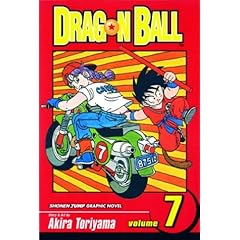
Thunderbirds Classic Comic Strips and Dragon Ball vol. 7

Here's how this works: I finish reading something, and I tell you about it, and I try not to bore you to death.


Sharp-eyed readers will note that I only became aware of this collection a few months ago, when doing a Reprint This! feature on the brilliant old Thunderbirds strip that used to run in TV21 and Countdown in the late sixties and early 1970s. Turns out this is not as complete as I'd like, at all, and suffers from a lack of production credits - Graham Bleathman and Sam Denham did a great job incorporating period advertisements and features into the book, but didn't find room for any "originally presented in" notations, or a stripography like a typical Titan collection would include in the back.

The stories themselves - five Thunderbirds strips and three of the companion Lady Penelope stories - are very entertaining. They are all written by Alan Fennell, who wrote about one-third of the TV scripts, so they're very true to the series. Six are from the weekly comics and two are presumably from some annuals or specials. Most of them are illustrated by Frank Bellamy, with a couple by Eric Eden and one by Dan Dare's Frank Hampson. It is very entertaining, and the price is fantastic, but a more comprehensive set of reprints is still needed.


In 1984, Akira Toriyama ended his hit comic Dr. Slump, which, especially on the back of a long-running TV cartoon adaptation, had made him some serious bank and the clout to do whatever he wanted for Shonen Jump next. That turned out to be Dragon Ball. The only things you need to know about Dragon Ball are that it ran almost every week for eleven years, it led to an omnipresent TV franchise and countless imitation series (Pokemon, Yu-Gi-Oh, InuYasha, etc), and, a year and a half into its endless, turgid run, two of the duelling characters land in Dr. Slump's Penguin Village in what I would assume to have been a hugely promoted three-week crossover.

So in volume 7, you get thrown in the deep end of this ongoing chase/fight between the young martial artist protagonists and the evil Commander Blue, who has the power to paralyze opponents by making eye contact with them. This actually leads to the only point where I laughed aloud reading the book, and I'll spoil it for you: Son Gokku gives Commander Blue a Moe Howard-esque double eye-poke to nullify his power. Anyway, more than a hundred pages into this, Blue and Gokku's scrap has them crashlanding into Penguin Village, where Arale thinks she's found somebody new to play with, and where Blue has to put up with Suppaman being as clueless as ever. It's recommended for Dr. Slump completists, but it's got a character who hasn't showed up in the English-language Dr. Slump books yet, so there's no big rush.

I think Toriyama's been enjoying the fruits of Dragon Ball's success ever since that strip ended. He's wealthy enough that he hasn't had to commit to any long-form projects in a dozen years. Apart from a few months' worth of mid-90s Dr. Slump comics (about which I know next-to-nothing; apparently the title translated as Dr. Slump Returns, But Only for a Short While), and a 14-week strip called Sand Land which Viz has released in the US as a done-in-one digest, Toriyama has only done short stories and projects, most of which haven't been translated or released in the US yet. I kind of wish we could see what wacky stuff he's up to these days.

(Originally posted March 10, 2008 at hipsterdad's LJ.)